[Bit#151] The Science of Shock Absorption in the Jaw Joint When Chewing Hard Food
Introduction
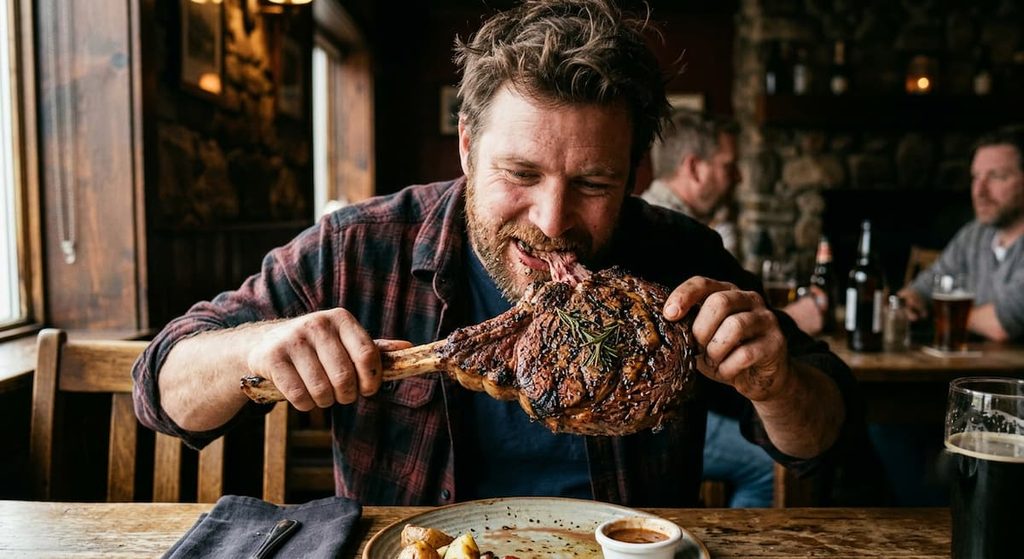
Every time we chew food without a second thought, the jaw joint endures an unimaginably massive load. A powerful force reaching tens of kilograms is concentrated onto a surface area of teeth and bone measuring just a few millimeters. Yet, curiously, it is rare for teeth to shatter or jawbones to sustain damage. Why is that? The secret lies in the periodontal ligament, a thin membrane surrounding the root of each tooth, alongside the three-dimensional shock-absorbing system inside the temporomandibular joint. Let us unravel the mechanics of how this system operates.
1. Unbelievable Loads and Physical Pressure Placed on the Jaw Joint
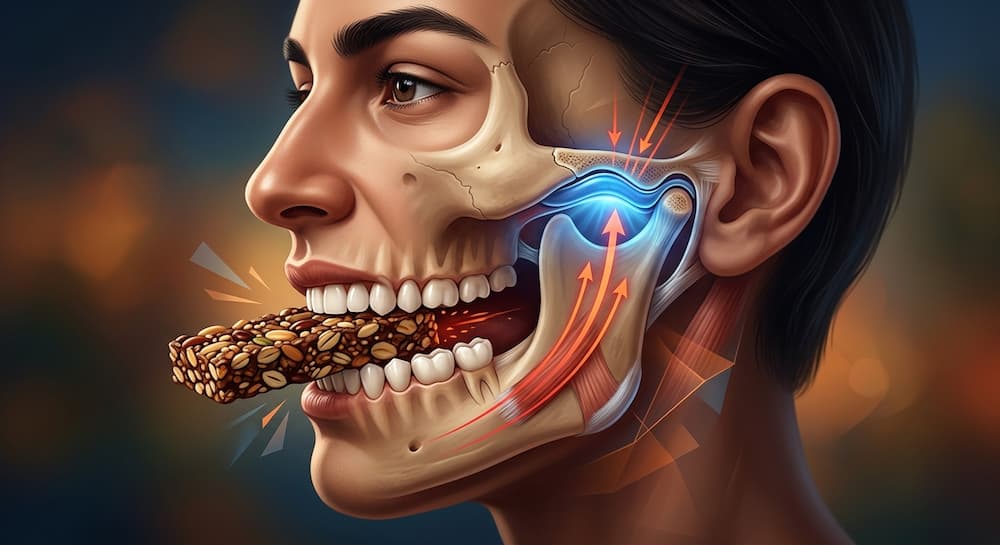
When we bite down on hard food with our molars, how much force is applied in an instant? Remarkably, the force exerted on a single molar reaches between 50 to 90 kilograms, closely matching an individual’s total body weight. The maximum instantaneous bite force can even surpass 100 kilograms. This immense force becomes concentrated over a tiny tooth area, converting into pressure equivalent to hundreds of pascals. This occurs as the masseter and temporalis muscles contract with tremendous strength, clamping the upper and lower jaws tightly together. To break down tough food, this intense physical pressure repeats hundreds of times every single day.
Where does all this vast physical impact actually go? If this force transferred directly into the bone structure and brain, micro-cracks would inevitably form in the skull daily. However, the human body utilizes the articular disc and powerful ligament structures inside the jaw joint to disperse this stress across multiple angles. As the condyle head moves within the glenoid fossa, it glides dynamically to divide and absorb the impact over a wider surface. The articular disc, composed of cartilaginous tissue, deforms its shape under heavy compression to absorb energy, while synovial fluid within the joint reduces mechanical friction and supports fluid-dynamic buffering.
This is virtually identical to installing a sophisticated seismic dampening system inside the mouth, much like those engineered into high-rise buildings to absorb earthquake waves. This exact mechanism explains why our bones and joints do not shatter whenever we chew meat with full force. Even a single chewing motion conceals a biomechanical miracle. Though we remain completely unaware, the jaw joint continuously absorbs lethal impacts every second, protecting the entire skull.
2. A Microscopic Cushion Absorbing Impact: The Structure of the Periodontal Ligament
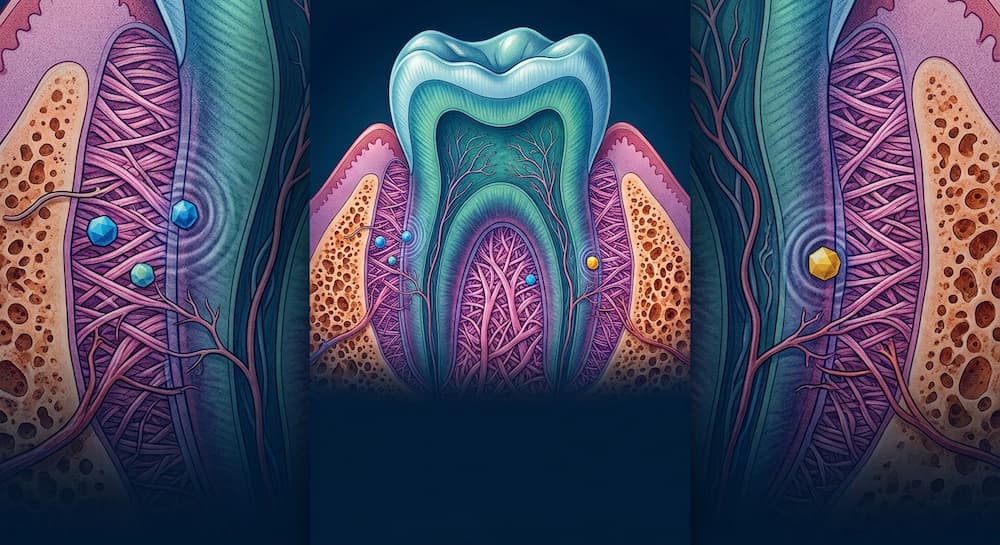
While the jaw joint primarily disperses large-scale shock, the microscopic stress exerted on individual teeth is controlled with absolute perfection by the periodontal ligament. The periodontal ligament exists in an extremely narrow gap measuring only about 0.2 millimeters between the tooth root and the surrounding alveolar bone. This microscopic space, barely visible to the naked eye, serves as the ultimate precision shock absorber in the human body.
Why can such an extraordinarily thin membrane withstand a crushing bite force of up to 90 kilograms? The secret resides in the three-dimensional arrangement of Sharpey’s fibers, which are bundles of collagen fibers that form the ligament. Rather than running in simple straight lines, these fibers link the tooth and bone in dense, fan-like, and radial patterns. When pressure hits a tooth, these fiber bundles pull taut, elasticity absorbing heavy mechanical tension.
An even more astonishing detail is the fluid-dynamic dampening system operating inside the periodontal ligament. The interior of the ligament is densely packed with micro-blood vessels and interstitial fluid. As teeth press down toward the jawbone during chewing, these fluids temporarily shift outside the ligament space, performing an initial hydraulic buffering action. In other words, a dual-dampening mechanism kicks in, fusing solid fibrous tissue with liquid blood dynamics.
Ultimately, the periodontal ligament physically prevents catastrophic collisions where tooth collides directly against bare bone. Thanks to this multi-layered cushioning, teeth endure heavy impacts without fracturing, shifting only minutely before rebounding back to their original positions. High-level bioengineering is packed inside a ridiculously thin boundary. This is precisely why teeth do not get uprooted or ruin underlying jawbones no matter what hard food we bite into.
3. Sensory Feedback Operating at the Moment of Chewing and the Role of Receptors
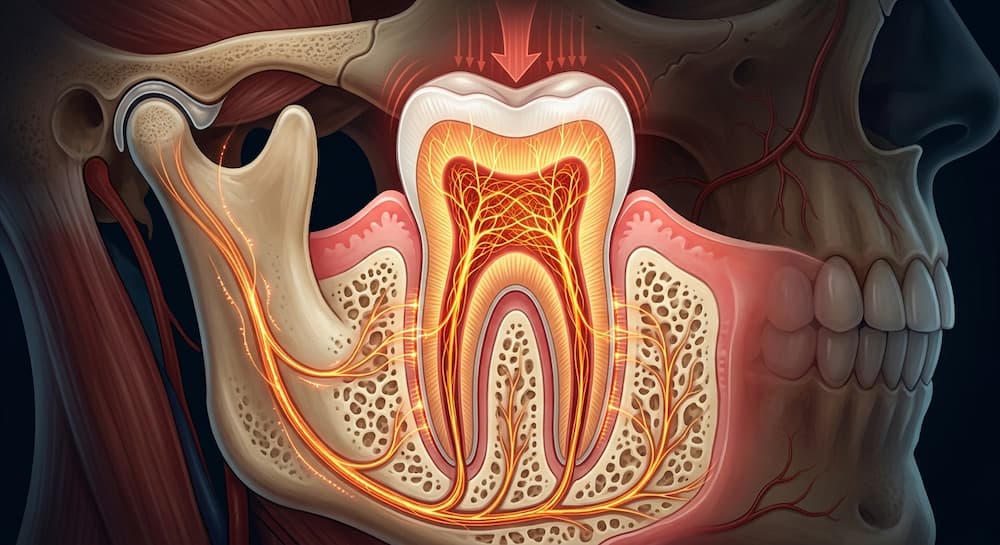
It is a huge mistake to assume the periodontal ligament acts merely as a passive rubber cushion. Embedded densely within this tiny tissue are sophisticated mechanoreceptors that detect physical stimuli in real time. The moment we chew, these sensory receptors measure the magnitude and direction of pressure applied to the tooth down to thousandths of a second, transmitting that data continuously.
The instant force touches a tooth, mechanoreceptors fire electrical nerve signals directly up to the brainstem. Receiving these signals, the brain immediately begins fine-tuning the contraction strength of the jaw muscles. Why does such an intricate feedback system exist in the first place? It is designed specifically to prevent teeth and jaw joints from being destroyed by excessive, destructive forces. A classic example is the involuntary reflex where your mouth snaps open before your conscious brain can even think when you accidentally bite into a stone or hard bone hidden in food.
Thanks to this precision sensor network, we can safely chew everything from soft pudding to tough barbecue using just the right amount of biting force. The brain and the periodontal ligament communicate in real time, constantly monitoring minute pressure changes. Without this flawless mechanism converting mechanical stress on teeth into electrical signals sent to the brain, our teeth would have broken long ago. Intelligent neural circuits operate inside the mouth every single moment, completely safeguarding joints and surrounding jawbones.
4. Mechanisms of Tooth and Joint Damage Triggered by Dampening Failure
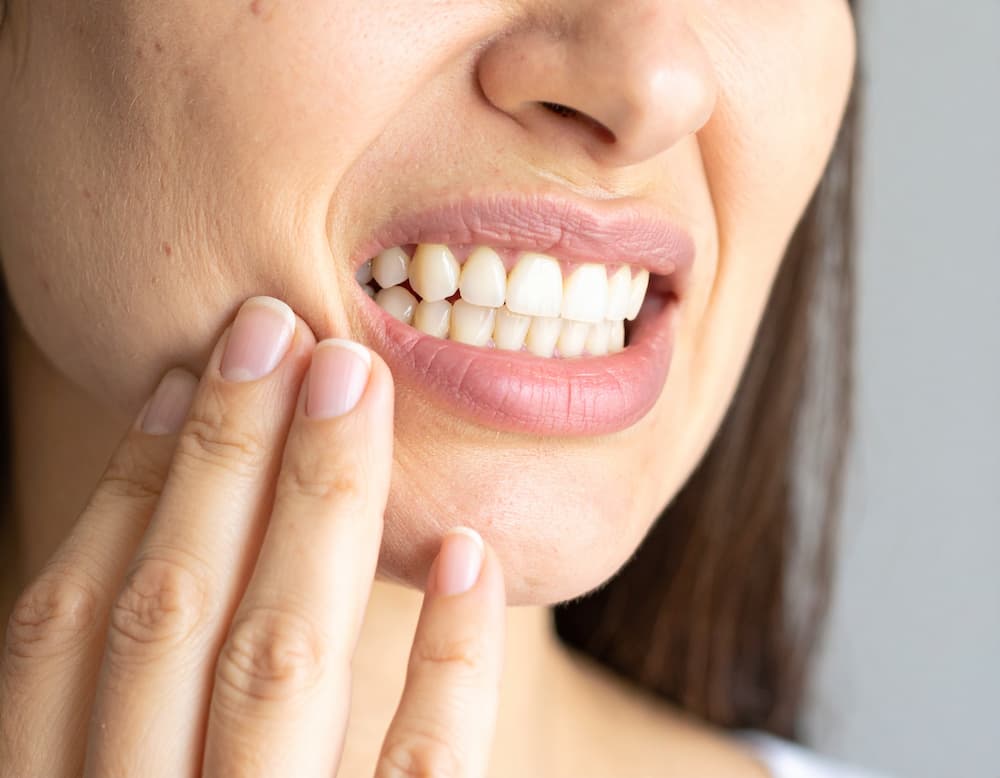
No matter how sophisticated a cushioning system may be, continuous and extreme overload will eventually cause it to collapse. Chronic habits like teeth grinding, jaw clenching, or sudden external trauma easily exceed the absorption capacity of the periodontal ligament. When pressure beyond the threshold persists, microscopic blood vessels inside the ligament compress, paralyzing blood circulation and triggering severe micro-inflammatory responses within the tissue.
Once inflammation sets in, the periodontal ligament loses its natural elasticity, gradually becoming rigid, deformed, or destroyed. As the microscopic cushion performing the buffering action vanishes, physical impacts applied to teeth transfer directly to the underlying jawbone. Consequently, the alveolar bone wrapping around the tooth root fails to endure physical stress and accelerates into bone resorption, dissolving itself away. Deprived of its foundation, the tooth begins to wobble, ultimately leading to the tragedy of tooth fracture or complete loss.
This destructive aftermath does not stop at the teeth; it transfers directly into the jaw joint itself. Impacts unabsorbed by the periodontal ligament compress the articular disc inside the joint, wearing down cartilage and causing direct bone-on-bone friction within the joint cavity. Eventually, every movement of the jaw triggers severe pain and clicking sounds, culminating in temporomandibular joint disorder. The breakdown of a microscopic shock absorber cascades into the systematic physical destruction of the entire oral cavity.
Conclusion
Even in the moments we chew food without thinking, precision biomechanical buffering and neural monitoring occur nonstop inside our mouths. Without the seamless cooperation between the ultra-thin periodontal ligament and the jaw joint, human beings could not finish even a single meal safely.
Are we taking this miraculous seismic system for granted, abusing it with excessive stress and harmful habits? No matter how advanced technology becomes, it remains nearly impossible to perfectly replicate the intricate microscopic buffering mechanisms built into the human body. Right now, it is time to listen closely to the tiny structures inside your mouth, tirelessly fighting to protect your skull and teeth every single second.
![[Bit#4] I Put Someone Else’s ‘Poop’ in My Body, and a Miracle Happened](https://hiddenbitknowledge.com/wp-content/uploads/2026/04/main.Fecal-Microbiota-Transplantation-768x512.jpg)
![[Bit#101] Why Your Body Kills Millions of Cells Every Day: The Science of Apoptosis](https://hiddenbitknowledge.com/wp-content/uploads/2026/07/main.apoptosis-768x431.jpg)
![[Bit#2] Why We Fear the Dark: The Biological Blueprint of Nyctophobia](https://hiddenbitknowledge.com/wp-content/uploads/2026/04/260415_공포_main-768x555.jpg)
![[Bit#105] Forensic Genetics: Reconstructing Suspect Faces and Biological Traits from a Single Cell](https://hiddenbitknowledge.com/wp-content/uploads/2026/07/main.DNA-tracing-technology-768x544.jpg)
![[Bit#173] Why Do Wounds Itch When They Heal?](https://hiddenbitknowledge.com/wp-content/uploads/2026/10/main.Healing-wound-768x419.jpg)
![[Bit #154] Why 5 Nobel Prizes Went to Fruit Fly Research](https://hiddenbitknowledge.com/wp-content/uploads/2026/09/main.fruit-fly-768x419.jpg)