[Bit#95] 3D Bio-Printing: The Artificial Organ Revolution Challenging the Realm of God
Introduction
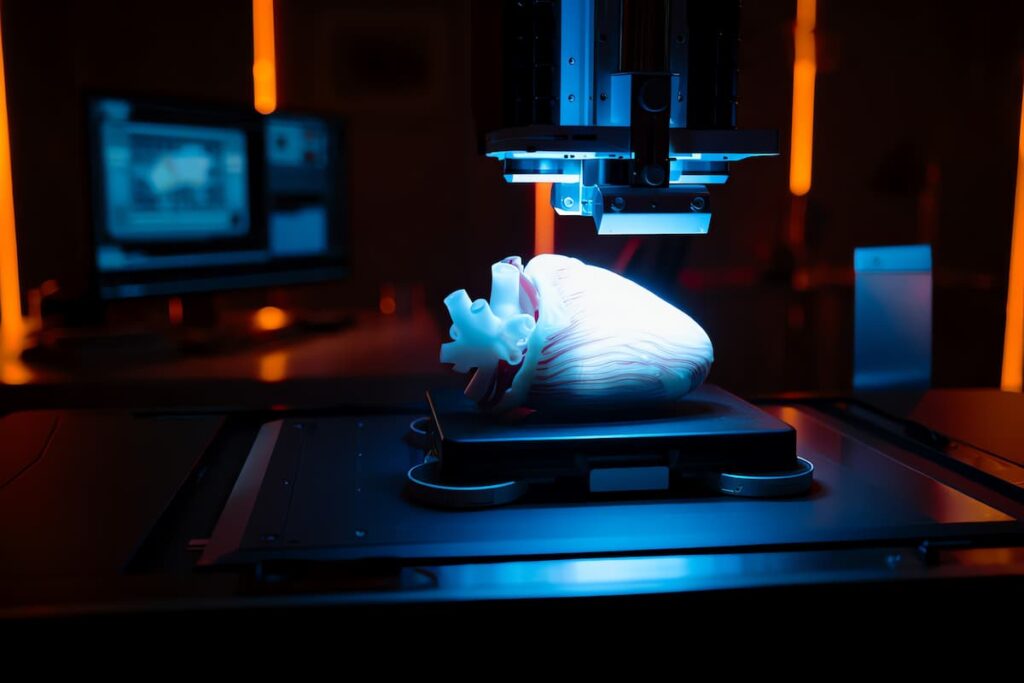
We live in an era where patients have no choice but to wait endlessly for an organ donor to appear. But what if we could extract a patient’s own cells and print a flawless, complete organ using a 3D printer? This article explores the present and future of 3D bio-printing, a technology set to redraw the map of human life extension. We will examine exactly when these artificial organs will seamlessly integrate into our bodies, as well as the technical limitations and the hidden narratives that lie beyond them.
1. Printing with Cells: The Core Mechanism of Bio-Printing
This is not a printer that writes letters on a piece of paper. It stacks cells in three dimensions to construct actual, living tissue. How is such a feat even possible? The secret lies at the heart of bio-ink. Just as a conventional printer utilizes ink, a bio-printer dispenses a specialized liquid mixture composed of living cells and hydrogels. Hydrogels act like a supportive home, providing the optimal environment for the cells to survive. They are manufactured from biological substances such as gelatin or collagen. Within this fluid environment, the cells breathe, absorb nutrients, and remain active. The printer nozzle continuously layers this bio-ink by drawing microscopically thin lines. Once a single layer is deposited, it is solidified into a gel-like state using specific light exposure or temperature control. This meticulous process of stacking the subsequent layer is repeated thousands of times.
This technology does not merely mimic the external shape of an organ. A 3D bio-printer receives raw data directly from computed tomography or magnetic resonance imaging scans. It precisely replicates the patient’s actual organ architecture at a micrometer scale. The machine flawlessly calculates the intricate internal pores and the exact positions where each cell must be arranged. The core of this mechanism involves precisely controlling the pressure so that the cells do not suffer fatal damage from the impact the moment they are ejected from the nozzle. What would happen if the pressure becomes too intense? The cell membranes would rupture, converting the living material into nothing more than a simple clump of protein. Scientists employ sophisticated fluid dynamics to ensure the cells remain alive while preserving the highly precise structure. Over time, the cells within the ink begin to exchange signals with one another. They spontaneously bind together, grow, and commence functioning just like real human tissue. It is the profound moment where inanimate material transforms into a living organism.
2. The Challenge of Vascularization: It is Not Just About Replicating the Shape
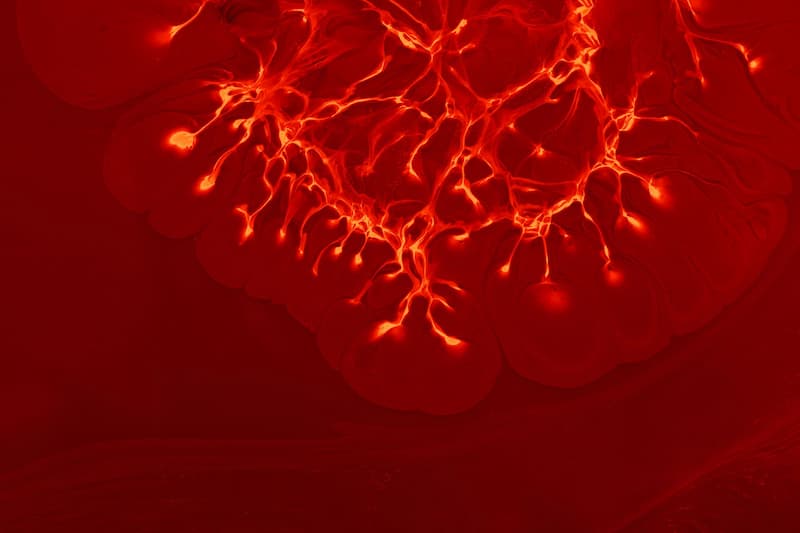
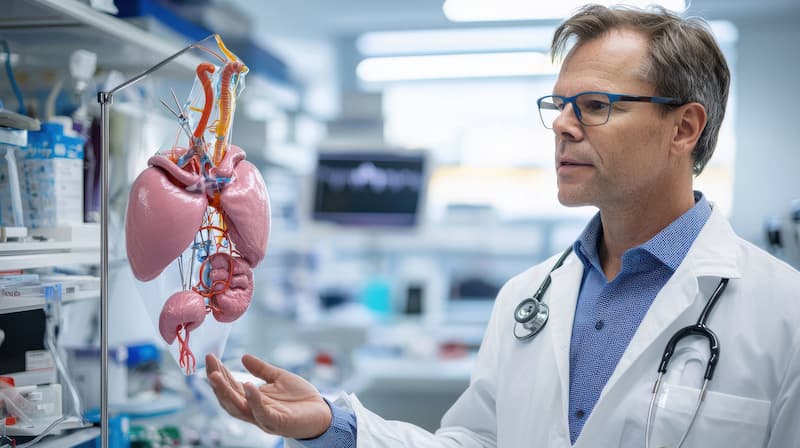
Replicating the exact appearance does not make a functional organ. It must actively live and move to be considered a true organ. Currently, bio-printing technology can perfectly replicate the outer appearance of organs like the liver or the heart. However, a fatal obstacle persists. That obstacle is the vasculature. For an organ to function properly, oxygen and essential nutrients must be supplied to every single individual cell. Metabolic waste products must also be efficiently evacuated. The capillaries are responsible for this entire process. These microscopic vessels, which are dozens of times thinner than a human hair, spread throughout the entire organ like an intricate web. Replicating this vast vascular network with a printer represents a challenge on a completely different level.
Why is this endeavor so immensely difficult? If you leave the vascular pathways completely empty while stacking the cells, the entire tissue structure will collapse. Conversely, if you print the structure completely solid, the internal cells will starve to death. If the oxygen supply is severed for even a few days, the tissue begins to decay. A phenomenon occurs where the exterior looks perfectly intact, but the interior becomes completely dead. To overcome this dilemma, scientists have devised an ingenious method. It is an approach that utilizes temporary sacrificial scaffolds. During the printing process, a specialized sacrificial hydrogel is filled into the exact locations where the blood vessels will eventually be positioned. Once the overall architecture of the tissue is fully established, this sacrificial gel is cleanly dissolved away using temperature adjustments or light. This leaves behind microscopic empty channels inside the tissue. Endothelial cells are then injected into these vacant pathways, inducing them to spontaneously construct actual blood vessel walls.
Yet, this process is still far from perfect. Connecting large vessels with microscopic capillaries simultaneously remains an extraordinarily difficult task. Creating robust vessel walls that can withstand fluid pressure is another major hurdle. If a blood vessel ruptures or becomes blocked, the artificial organ instantly turns into a useless mass. Constructing a flawless vascular network is truly the final gateway for artificial organs to exit the laboratory and enter the human body. To solve this monumental riddle, scientists worldwide are mobilizing both fluid dynamics principles and advanced nanotechnology.
3. Zero Immune Rejection: Customized Organs Built from My Own Cells
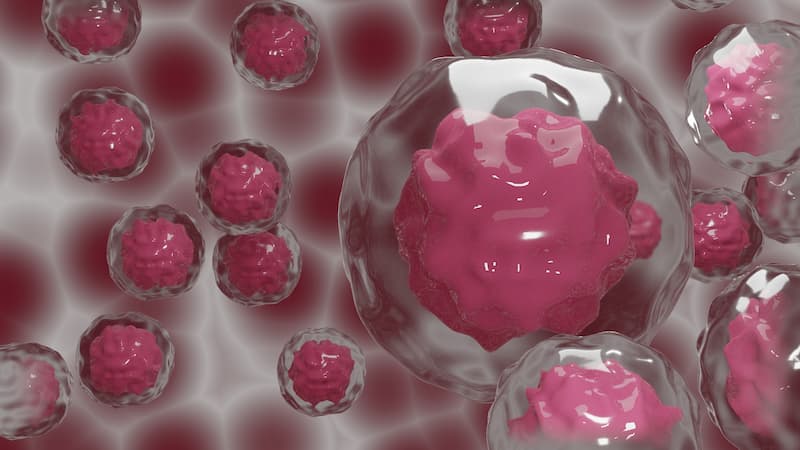
The most devastating tragedy in the medical field is immune rejection. When a patient receives an organ transplanted from someone else, the immune cells inside the body trigger a violent reaction. This happens because the immune system recognizes the donated organ as an external invader and attempts to destroy it. Consequently, the patient must take potent immunosuppressants for the rest of their life. They live precariously amidst a constant risk of infection. However, 3D bio-printing technology can completely bring an end to this tragedy. The secret is hidden right inside the patient’s own body. Scientists extract skin or blood cells from the patient and reverse the genetic clock. This process involves creating omnipotent cells that can transform into any type of cell. In scientific terms, these are called induced pluripotent stem cells. These cells are then differentiated into the specific organ cells required and used as the printer ink.
Why must we go through the trouble of creating an organ using our own cells? The human immune cells continuously verify a unique identification card attached to the surface of every cell. An organ printed using cells derived from my own body possesses my original identification information intact. Naturally, there is absolutely no reason for the immune cells to mistake it for an outsider and launch an attack. This means a dream organ completely free from the risk of side effects is born. This technology goes far beyond simply resolving the problem of organ shortages. It enables an individualized custom design tailored precisely to the patient’s exact anatomical structure and physical size. Once the customized organ enters the body, it rapidly exchanges signals with the surrounding tissues and integrates seamlessly. A future where patients enjoy a healthy life without the need for immunosuppressants is fast approaching. Scientists have already succeeded in culturing microscopic artificial tissues with perfect immune compatibility in the laboratory. The only remaining hurdle now is safely scaling up this technology to the massive size of a functional organ that humans can directly utilize.
4. The Boundary of Life Cloning: Ethical Questions We Must Confront
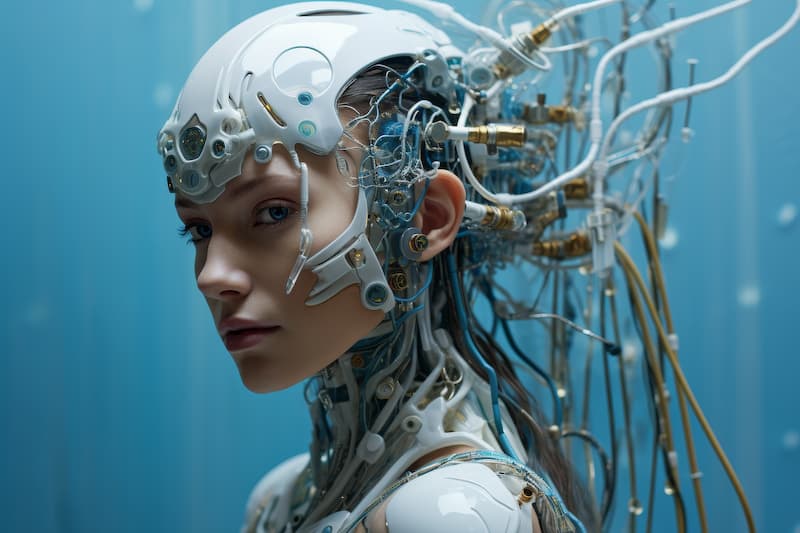
Technology constantly tests the limits of humanity. 3D bio-printing is no exception to this rule. What if anyone could purchase a new organ at any time as long as they have enough money? The extension of human life would become deeply polarized based on the wealth gap. The wealthy might enjoy near-immortality by continuously replacing their damaged organs. On the other hand, the impoverished could be left neglected amidst the excruciating pain of disease. It is a moment where the sacred value of life becomes thoroughly commodified by the logic of capital. The advancement of science could potentially turn social inequality into an insurmountable, permanent wall.
An even more chilling question exists. Once the technology to print organs becomes fully mature, what will come next? Scientists will not stop at fingers or limbs; they will eventually attempt to replicate the human brain itself. As we continuously swap out parts of the human body like mechanical components, a fundamental question inevitably arises. Exactly how many parts must be replaced before we can no longer call that person their true self? If even a portion of the brain is replaced with bio-ink, can we be certain that the person’s memories and soul will remain completely intact? This dilemma extends far beyond a simple medical issue. It triggers a massive philosophical confusion that forces us to redefine the very meaning of being human.
Ethical guidelines are currently failing to keep pace with the sheer speed of technological advancement. The boundary of life cloning has already begun to blur. The manufacture of living tissue, an act once considered exclusively the realm of God, is now occurring at the fingertips of humans. Are we truly prepared to handle this incredibly powerful weapon? We must remain vigilant against the seeds of destruction hidden behind the sweet fruits of convenience and life extension. This is precisely why establishing a moral consensus among humanity is just as urgent as perfecting the technical execution of the technology itself.
Conclusion
3D bio-printing is simultaneously a profound blessing and a monumental test for humanity. We hold the ultimate key to saving patients who are currently dying while waiting for an organ donation. At the same time, we have opened a Pandora’s box that could potentially dismantle the core value of life. Are we truly dominating science, or is science slowly swallowing human dignity? When the era arrives where every single component of our physical body can be flawlessly replaced, we must deeply reflect on whether we will still be able to proudly call ourselves dignified human beings.
![[Bit#132] Paclitaxel: The Yew Tree Cancer Cure](https://hiddenbitknowledge.com/wp-content/uploads/2026/08/main.yaw-tree-768x419.jpg)
![[Bit#126] Alien Biology Unveiled: What Forms Could Extraterrestrial Life Take Beyond Earth?](https://hiddenbitknowledge.com/wp-content/uploads/2026/08/main.-Alien-Biology-Unveiled-768x419.jpg)
![Cut a Planarian, and It Can Regrow Its Body. How? [Bit#178]](https://hiddenbitknowledge.com/wp-content/uploads/2026/10/main-image-2-767x428.jpg)
![[Bit#118] Hydroponics: The Science of Growing Plants Without Soil](https://hiddenbitknowledge.com/wp-content/uploads/2026/08/main.Hydroponics-768x512.jpg)
![[Bit#15] Cryonics: A Scientific Gamble Toward Life After Death](https://hiddenbitknowledge.com/wp-content/uploads/2026/04/ab12b1d4e7ff-768x513.jpg)
![[Bit#122] Synthetic Biology: The Dawn of an Era Designing Life Anew](https://hiddenbitknowledge.com/wp-content/uploads/2026/08/main.-Synthetic-Biology-768x419.jpg)