[Bit#107] Extreme Survivors of the Arid Land: The Hidden Scientific Secrets of Cacti
Introduction
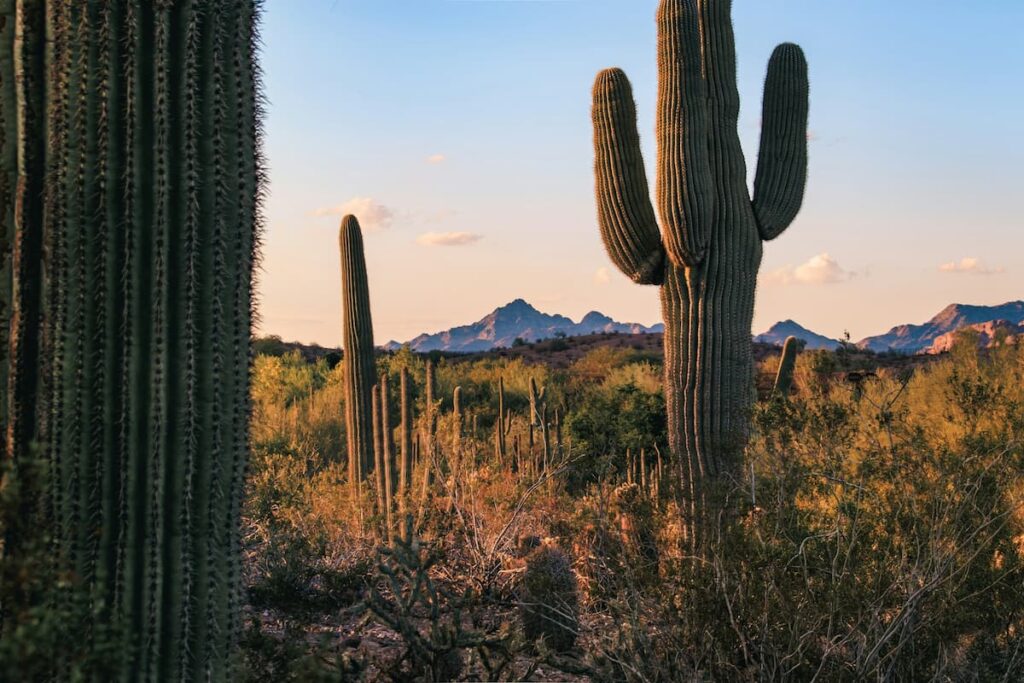
How can cacti survive for decades in extreme deserts where not a single drop of rain falls? It is not merely a matter of growing thorns and storing water. Inside the body of a cactus, mysterious chemical reactions and physical traits operate that are rarely seen in other plants on Earth. We delve into the fierce yet wondrous survival methods of cacti unfolding under the scorching sun through a scientific lens. Today, through this small spiky plant, we reflect once again on the magnificent adaptability of life.
1. Spines Are Modified Leaves: The Real Secret to Preventing Water Loss
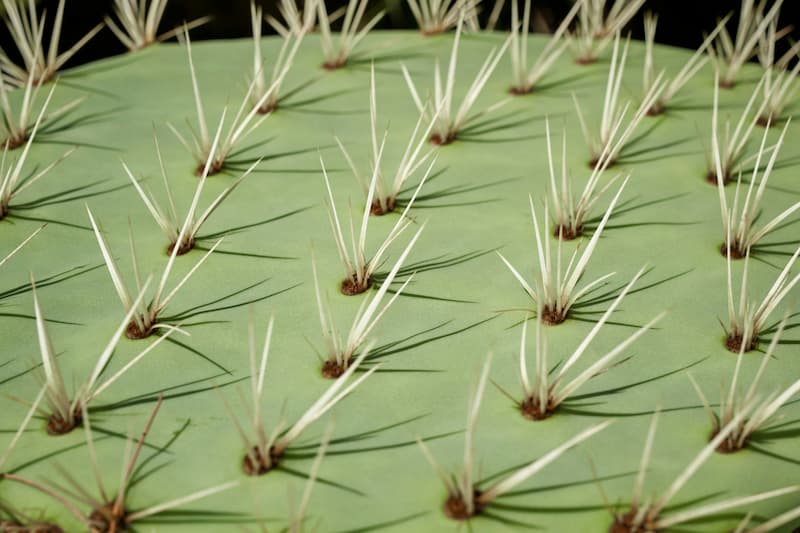
When you look at the spines of a cactus, it is easy to think of them simply as defensive weapons to ward off animal attacks. Is that really the only reason? The spines of a cactus were originally green leaves. In a blistering desert environment, broad leaves are poisonous to survival. A wide leaf surface area is the primary culprit behind losing moisture to the air. Cacti made a drastic choice. They degraded their leaves into sharp spines. By extremely reducing the surface area, they successfully prevented water evaporation.
However, the role of spines does not end here. Spines are precise engineering products that go beyond a simple shield. Thousands of spines create microscopic shadows on the surface of the cactus. These shadows lower the stem’s temperature. They block the scorching midday heat from directly touching the stem. Even a drop of a few degrees on the plant’s surface dramatically reduces evaporation. The dense mesh of spines acts as a natural insulator and shade canopy.
There is an even more astonishing fact. When night falls, the desert cools down rapidly. Microscopic moisture in the air condenses as dew on the tips of the spines. The micro-grooves on the spine surface do not repel this dew. Utilizing capillary action, they guide the formed water droplets toward the stem. The unique protein structures and micro-ridges on the spine surface exert a force that pulls water molecules in. In essence, the plant collects moisture from the air through its spines without relying solely on its roots.
The color and arrangement of the spines are not accidental either. White or light-colored spines reflect intense ultraviolet rays. Reflecting light prevents cellular damage and protects the main body from overheating. Furthermore, the intertwined structure of the spines reduces wind speed. Strong winds passing over the stem surface quickly strip away moisture. The spines finely disperse this wind, maintaining humidity at the surface.
Ultimately, cactus spines are not simple prickers meant to poke herbivores. They are umbrellas blocking sunlight and natural sunscreens. They are antennas gathering water from the air and windbreaks slowing down harsh breezes. By shedding the name of leaves and wearing the clothes of spines, they have become the ultimate survival tool unique to cacti.
2. Breathing Only at Night: The Special Stomatal Opening and Closing System

Ordinary plants open their stomata wide during the day when sunlight shines brightly. They do this to absorb carbon dioxide from the air while taking in solar energy. However, in an extreme environment like a desert, this method means immediate death. Opening stomata under the intense heat and dry winds of midday causes internal moisture to evaporate into the air far faster than carbon dioxide can be absorbed. Deprived of water, a plant completely dries up within just a few hours. Why did the cactus choose a different path?
Cacti attempted a bold reversal for survival. During the hottest daytime hours, they strictly close all stomata, completely blocking water loss. Then, they wait for the night when everyone else is asleep. As the sun sets and temperatures drop, the desert air cools down, and relative humidity rises. The cactus targets this precise moment to finally open its doors. It absorbs carbon dioxide safely while minimizing water loss.
Here, a question arises. Photosynthesis requires sunlight, so how can carbon dioxide absorbed at night without any light be turned into nutrients? The true secret of the cactus lies in its internal chemical factory. Instead of using the absorbed carbon dioxide immediately at night, it converts it into a special organic acid form and stacks it neatly inside large cell reservoirs. It quietly accumulates raw materials overnight for use the next day.
When the scorching sun rises again the next morning, the cactus tightly seals its stomata. With the pathways for moisture leakage completely blocked, it gradually pulls out the organic acid stored internal overnight. Exposed to intense sunlight without opening its stomata, it breaks down carbon dioxide internally and carries out photosynthesis. It is a unique system that produces nutrients using self-made raw materials in complete isolation from the outside world.
Thanks to this sophisticated time-division strategy of moving opposite to others, the cactus maintains its life with almost no water loss, even in a desert where a single drop of water is precious. It is the most perfect and smart chemical adaptation created by evolution against a relentless environment.
3. Physics of the Pleated Stem: The Expansion Principle of Unfolding When Water Is Absorbed
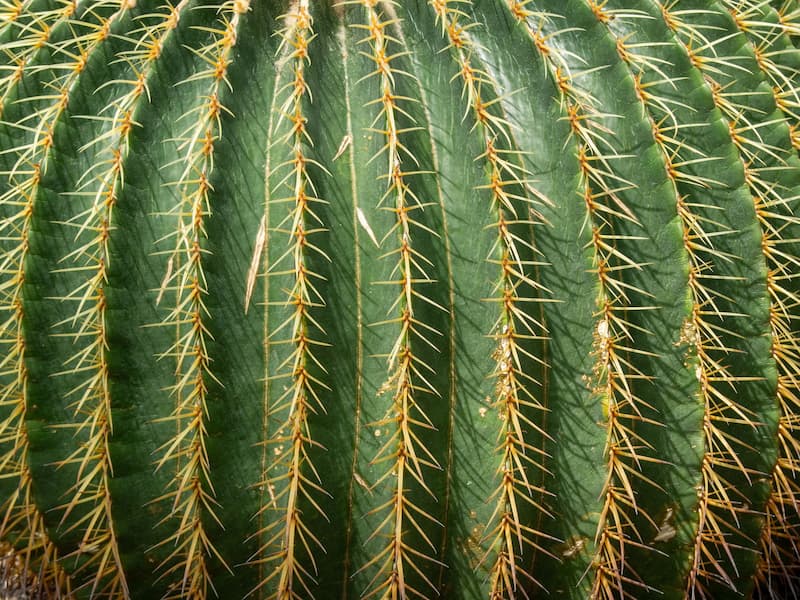
Have you ever closely observed the body of a cactus? It is not a smooth, round cylinder. It has a pleated structure deeply carved up and down like an accordion, tightly pulled together. Why did cacti end up with pleated skin that appears so inefficient? The answer is to freely control expansion and contraction.
Deserts are places where rain falls very rarely. However, on the rare occasion it does rain, a massive downpour spills out all at once. Cacti must never miss this single opportunity. They must absorb the pouring water in an instant and store it inside their bodies. What would happen if the stem’s skin were hard and flat? When suddenly absorbing water, it would burst from being unable to withstand internal pressure.
Pleats are the decisive safety device solving this problem. Under normal dry conditions, the pleats of a cactus are narrowly folded. Then, when rain falls and water rises from the roots, the pleats begin to unfold left and right. It works on the same principle as a pleated skirt or an accordion expanding. Volume can increase up to dozens of times without cells bursting. Large columnar cacti absorb hundreds of liters of water from a single rainstorm, swelling their body size tremendously.
Of course, storing water well is just as important as filling up plenty of it. Cells inside the cactus stem differ in structure from ordinary plants. They are filled with special mucilage, a viscous substance, inside the cells. This mucilage pulls water molecules in and binds them tightly in a jelly-like form. It serves as a hydrophilic solution that prevents entered water from easily evaporating or escaping outward.
In the end, the pleated stem of a cactus is not a simple shape. It is a giant water tank and a precise, flexible architectural structure that dynamically regulates internal pressure. Thanks to this wise physical design, cacti hold out silently using their internal jelly water tank, even when no rain falls for months.
4. Speed Innovation of Roots: Absorbing Roots Growing in Hours When Rain Falls

Cacti do not show astonishing adaptability only above the dry ground. Out of sight deep underground, they are waging a giant war for survival. People often assume that cactus roots extend dozens of meters underground in search of water. Is that really true? It is quite the opposite. The roots of a cactus are spread out wide like a net, very shallowly right below the surface.
Why don’t they send roots deep down? Rain falling in the desert evaporates quickly due to ground heat before penetrating deep into the soil. To snatch up microscopic amounts of moisture dampening the surface before disappearing, roots must be located right beneath the soil.
An even more surprising secret lies in normal dry conditions. When drought persists, cacti dry up their fine rootlets themselves to conserve energy. They shed the fine roots that absorb water, blocking moisture leakage. Underground looks completely dried up, and cactus roots appear almost dead.
However, the moment a single raindrop falls on the ground at the end of a drought, a miracle occurs. Upon sensing moisture, the cactus triggers new fine roots to grow explosively within a short window of two to four hours. Signal substances radically accelerate cell division. Before the rain even stops, fine absorbing roots are completed, sweeping up every last drop of water remaining in the soil.
Thanks to this speed innovation of creating organs on the spot only when needed, cacti secure water perfectly without missing a fleeting opportunity in the desert.
Conclusion
The survival method shown by cacti in the merciless hell of the desert is not merely a technique for saving water. It is the result of a great adaptation, completely remodeling their form, chemical processes, and even biological clock without blaming the environment.
Looking at this spiky desert plant, we are prompted to ask a question. When facing a severe drought in our own lives, do we have the courage to boldly shed our heavy leaves like a cactus? And are we prepared to transform ourselves in a matter of hours to seize a fleeting opportunity that comes along once?
![[Bit#91] The Secret of the Immortal Jellyfish’s Rejuvenation](https://hiddenbitknowledge.com/wp-content/uploads/2026/07/main.Immortal-Jellyfish-1-768x512.jpg)
![[Bit#50] The Great Survival Strategy of Plant Hormones](https://hiddenbitknowledge.com/wp-content/uploads/2026/06/64472267701f-768x419.jpg)
![[Bit#140] Crab Molting Secrets: Why Crustaceans Must Risk Death to Grow](https://hiddenbitknowledge.com/wp-content/uploads/2026/09/main.crab-molting-768x419.jpg)
![[Bit#103] Self-Luminous Plants: Genetically Modified Glowing Trees to Replace Streetlights](https://hiddenbitknowledge.com/wp-content/uploads/2026/07/main.Bioluminescent-plants-768x431.jpg)
![[Bit#44] The Bizarre World of Mushrooms](https://hiddenbitknowledge.com/wp-content/uploads/2026/05/24e5b396f4e7-768x512.jpg)
![[Bit #152] How Cat Purrs Heal Bones and Tissue](https://hiddenbitknowledge.com/wp-content/uploads/2026/09/main.cat-purring-close-up-768x512.jpg)