[Bit#106] Hyena: The Ultimate Cleaner of the Ecosystem and Its Survival Mechanism
Introduction
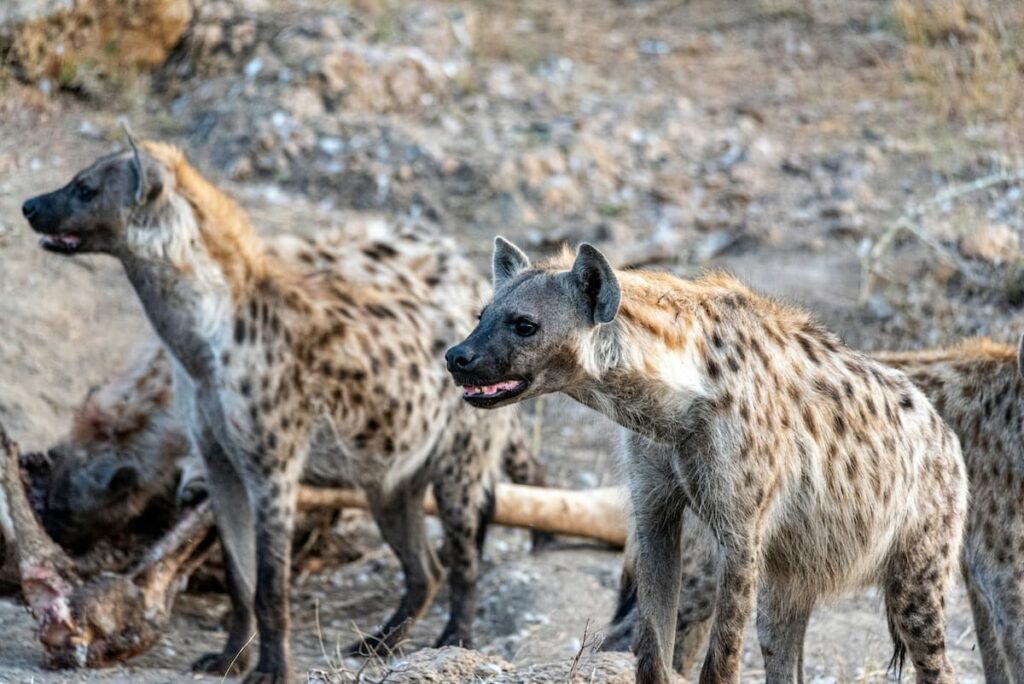
There is an animal that cleans up even the hard bones and rotting meat left behind by other animals without leaving a trace. It is the hyena. Is it simply driven by a dirty eating habit? No. It is a thoroughly evolved survival strategy. By monopolizing parts that others cannot eat, they keep the ecosystem clean. What biological secret lies behind this astonishing ability? Today, we dig deep into that special secret.
1. The Collaboration of Hyena’s Bite Force and Stomach Turning Bones into Powder
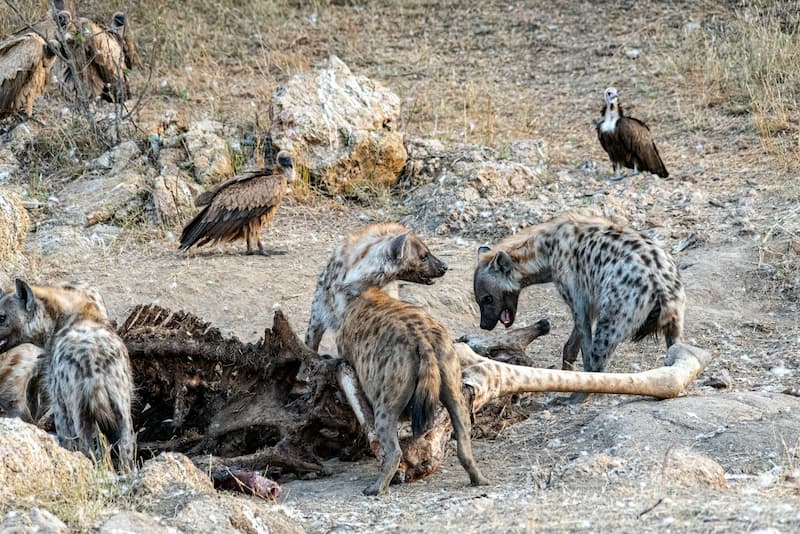
Hyenas do not just pick and eat the flesh of hunted prey. They chew and swallow whole hard skulls and leg bones on the spot that other animals gave up and left behind. How is such an amazing thing possible? The secret lies in the fantastic teamwork between terrifying jaw strength and a specially evolved stomach.
The chewing force of a hyena is truly beyond imagination. The force an adult hyena presses with its jaw reaches a whopping 450 kilograms. It is much stronger than lions or tigers, known as the kings of the jungle. Even the hard bones of cows or moose shatter like crispy crackers in front of a hyena’s teeth. They boldly crack thick leg bones to consume the savory and highly nutritious marrow inside.
However, a question arises here. No matter how finely broken it is, wouldn’t swallowing sharp bone pieces tear the stomach wall? That’s right. It is a very dangerous behavior. From this exact moment, the stomach steps up as a savior. When sharp bone fragments enter inside, the stomach pours out an enormous amount of sticky, thick mucus to protect the stomach wall. It wraps around the bone pieces so they settle safely inside the stomach.
Chemical action begins right after that. Because the bones were crushed into small pieces by jaw force, the area where stomach acid touches each bone fragment becomes much wider. It is the exact same principle that crushed ice melts faster in water than a large block of ice. Since the bones were broken down in advance, the time it takes for stomach acid to dissolve the bones is significantly reduced. Jaw and stomach move perfectly like a single team.
What would have happened if only the jaw force was strong and the stomach’s digestive capability was lacking? Sharp bones would have blocked the intestines, causing instant death. Conversely, if only the stomach acid was strong and the jaw force was weak, they couldn’t even swallow the bones properly. In the end, the perfect collaboration between terrifying grip strength and a specialized stomach made the hyena the ultimate bone crusher in nature.
2. Gastric Acid at the Level of Concentrated Hydrochloric Acid: Chemical Mechanism Breaking Down Calcium and Collagen
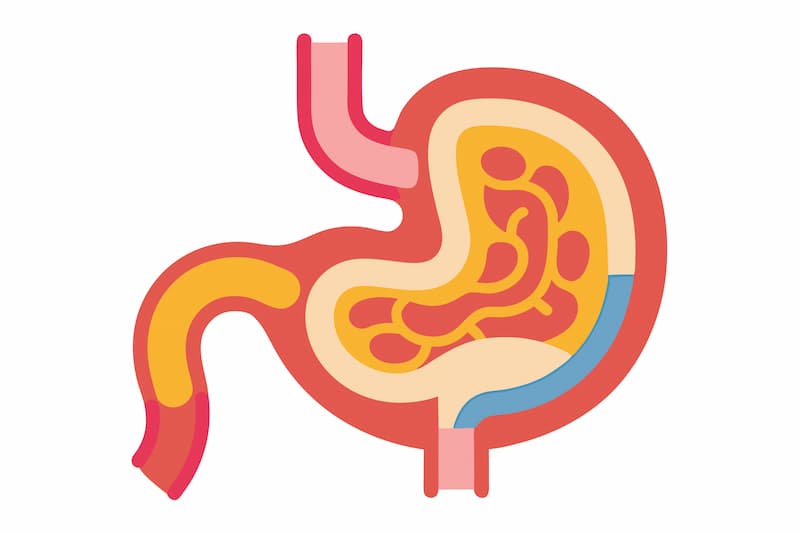
What process do the bone fragments swallowed by a hyena undergo inside the stomach? The answer is massive chemical decomposition. The secret lies in its powerful acidity. The stomach of an ordinary animal maintains a pH of around 2 to 3. On the other hand, a hyena’s stomach acid drops below pH 1. It is equivalent to concentrated hydrochloric acid used in laboratories or car battery fluid.
Why is such strong acidity necessary? Because it must completely dissolve hard bones. Bones are a structure where calcium complexes and collagen proteins are bound together extremely tightly. Ordinary acidity cannot break this rigid bond.
However, a hyena’s stomach acid is different. As soon as bones enter the stomach, it dissolves the calcium component. Calcium turns into calcium chloride, changing into liquid in an instant. Subsequently, it shatters the dense meshwork of collagen proteins. The pillars supporting the bone collapse from the root.
The result is incredible. In just a few hours, leg bones that were as hard as stone vanish without a trace. They turn into a thick nutritious liquid flowing along the digestive tract. Strong acidity does not merely aid digestion. It thoroughly eliminates deadly bacteria remaining on the bones. Even anthrax or food poisoning bacteria cannot survive in front of this strong gastric acid. It finishes digestion and disinfection at once.
Then why is the hyena’s stomach safe? If it is gastric acid at the level of concentrated hydrochloric acid, the stomach itself should melt. The hyena’s stomach wall secretes bicarbonate to continuously produce a neutralizing mucus layer. It effectively deploys a powerful chemical shield to protect itself in real time.
3. Unique Structure of Digestive Organs Completely Absorbing Nutrients Inside Bones
If bones were dissolved in an instant with powerful stomach acid, what step awaits next? Now, the stage of perfect nutrient absorption begins. Even if hard bones are turned into liquid, it is useless if the intestines cannot absorb them properly. The hyena’s digestive system is specially modified to sweep up even tiny proteins and calcium hidden inside bones.
The secret lies in its long and elaborate digestive tract structure. A hyena’s intestine is quite long for a carnivore. The melted bone soup moves slowly along the digestive tract. It earns as much time as possible to absorb nutrients. When strong acidic substances passing through the stomach enter the small intestine, powerful digestive enzymes pour out like a waterfall from the pancreas and gallbladder. Rapidly neutralizing the acid, they squeeze out and absorb fats and proteins.
The unique part is the nutrients located deep inside the bones. Bone marrow, rich in protein and iron, is packed inside the center of bones. Other animals only tear off the flesh attached to the outside and throw away this bonanza. But hyenas are different. They absorb chemically disassembled bone marrow components into their bodies at nearly one hundred percent.
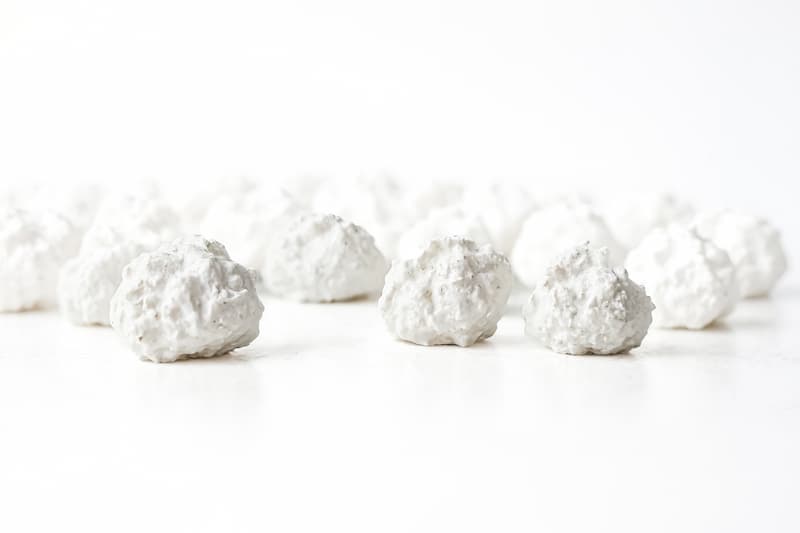
Then what happens to the undigested residue? Looking at hyena droppings reveals a very interesting fact. Their droppings turn pure white like chalk when dried. Why? Because mineral residue left after absorbing massive amounts of calcium from bones is excreted. The entire digestive system operates like a high-tech factory perfectly processing the rough material known as bone.
The ability to turn abandoned bones that others don’t even look at into a perfect energy source is truly peerless. The structure of the hyena’s digestive system is the best weapon evolution granted to survive in the harsh environment of the savanna.
4. Evolution of Extreme Survival Strategy Shown by Hyena, the Cleaner of the Ecosystem
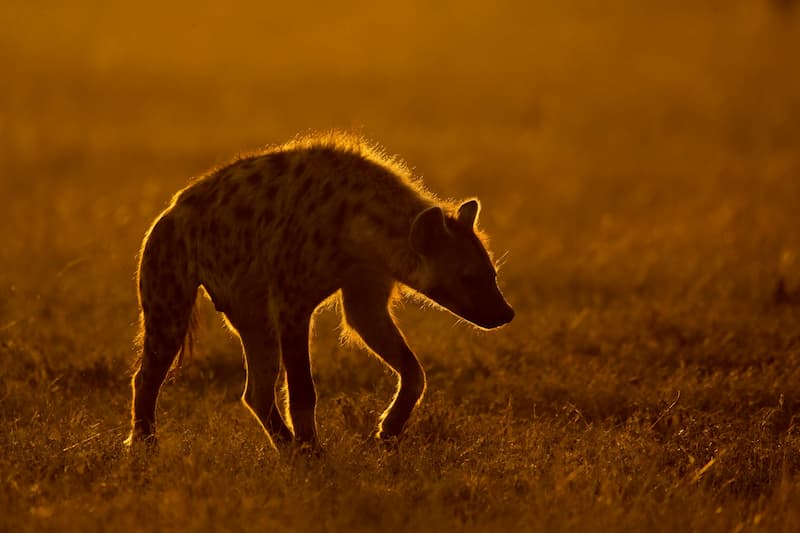
What is the real reason why hyenas came to possess such cruelly perfect digestive power? It is due to fierce competition for survival in the savanna ecosystem. The African savanna is truly a heaven and hell for hunters. Predators like lions, leopards, and cheetahs engage in bloody hunting every day. However, hunting success rates are lower than expected. Furthermore, having prey stolen happens frequently.
Hyenas chose a completely different strategy in this infinite competition. They do not cling only to fresh meat that others covet. Instead, they targeted trash left behind that other animals could never eat. Remaining hard skulls, hides, and even rotting carcasses were all turned into food. It is a wise rule of survival to monopolize areas that others gave up on.
Think about it. What would have happened if hyenas couldn’t dissolve bones? The African savanna would have been filled with massive animal bone graveyards and rotting carcasses. Various harmful bacteria and deadly infectious diseases would have raged. Hyenas clean up savanna carcasses thoroughly with terrifying stomach acid and jaw force. They play the role of true cleaners supporting the massive cycle of nature.
Ultimately, the hyena’s digestive system is not a simple eating habit. It is a masterpiece of evolution refined elaborately over millions of years to survive in the harsh wild. The ability to convert others’ byproducts into a perfect energy source, this is the ultimate weapon that made the hyena an absolute presence in the ecosystem.
Conclusion
Hyenas keep the ecosystem clean by removing animal bones and carcasses. If perfect cyclers like hyenas did not exist in nature, could the savanna ecosystem really have been maintained? The hyena’s way of survival, finding opportunities for life within trash discarded by others, makes us reflect once again on the value of abandoned things and the true meaning of ecological circulation today.
![Cut a Planarian, and It Can Regrow Its Body. How? [Bit#178]](https://hiddenbitknowledge.com/wp-content/uploads/2026/10/main-image-2-767x428.jpg)
![[Bit#138] How Mudskippers Breathe on Land: The Secrets of Cutaneous Respiration](https://hiddenbitknowledge.com/wp-content/uploads/2026/08/main.Mudskipper-767x428.jpg)
![[Bit#26] Mosquito: The World’s Deadliest Assassin or a Savior of Bio-Technology?](https://hiddenbitknowledge.com/wp-content/uploads/2026/05/5617e31f2ae8-768x509.jpg)
![[Bit#123] Miracle Substance in Sweet Wormwood Defeats Malaria](https://hiddenbitknowledge.com/wp-content/uploads/2026/08/main.Sweet-Wormwood-768x419.jpg)
![[Bit#97] The Lethal Defense Mechanism of Horseshoe Crab Blue Blood, the Lifesaver of Humanity](https://hiddenbitknowledge.com/wp-content/uploads/2026/07/main.Horseshoe-crab-ocean-768x484.jpg)
![[Bit#44] The Bizarre World of Mushrooms](https://hiddenbitknowledge.com/wp-content/uploads/2026/05/24e5b396f4e7-768x512.jpg)