Allelopathy: How Plants Use Chemistry to Influence Their Neighbors [Bit#183]
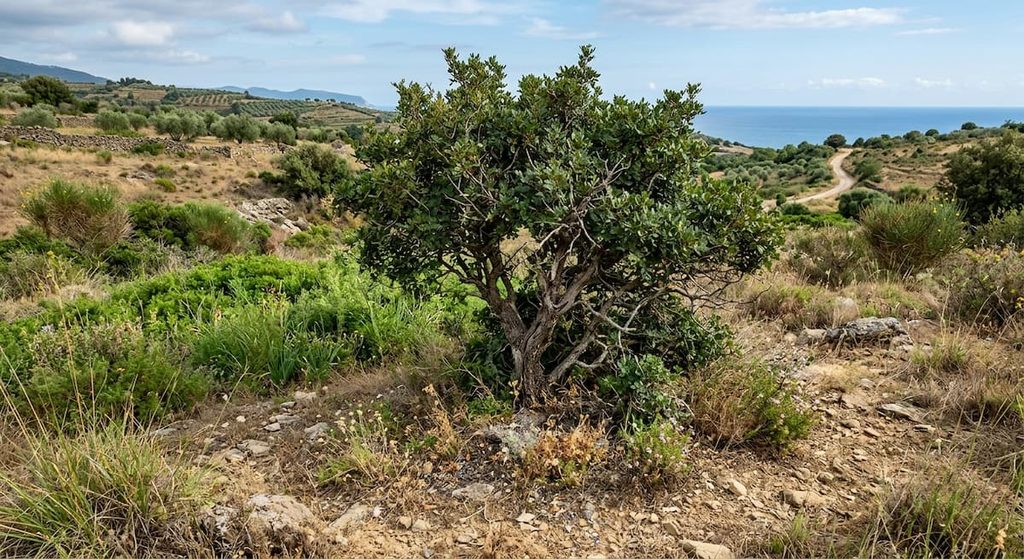
Look beneath a large shrub in a dry field. You might find bare patches of soil where few plants grow, even though the surrounding ground supports plenty of vegetation.
It is tempting to assume that the shrub is simply stealing all the water or blocking the sunlight. But there is another possibility: the shrub may be changing its neighbors’ chances of survival through chemistry.
Some plants release compounds that interfere with the germination or growth of other plants. This phenomenon is called allelopathy. It means that a plant can influence its neighbors not only by taking up resources, but also through chemicals that enter the surrounding environment.
Scientists have found examples of this effect in plants ranging from yellow fieldcress to cucumber and rye. Yet the story is more complicated than plants poisoning everything around them. A chemical that inhibits a seedling in an experiment may have a much smaller effect in nature, and a plant that suppresses one neighbor may actually help another.
Understanding why requires looking at what plants release, how other plants respond, and what happens when these interactions unfold in the real world.
A Plant Does Not Need to Touch Its Neighbor
Plants cannot walk away from a competitor or move to a better spot when conditions become difficult. Their roots must grow where they are, and their leaves must compete for whatever sunlight reaches them.
But plants are not chemically passive.
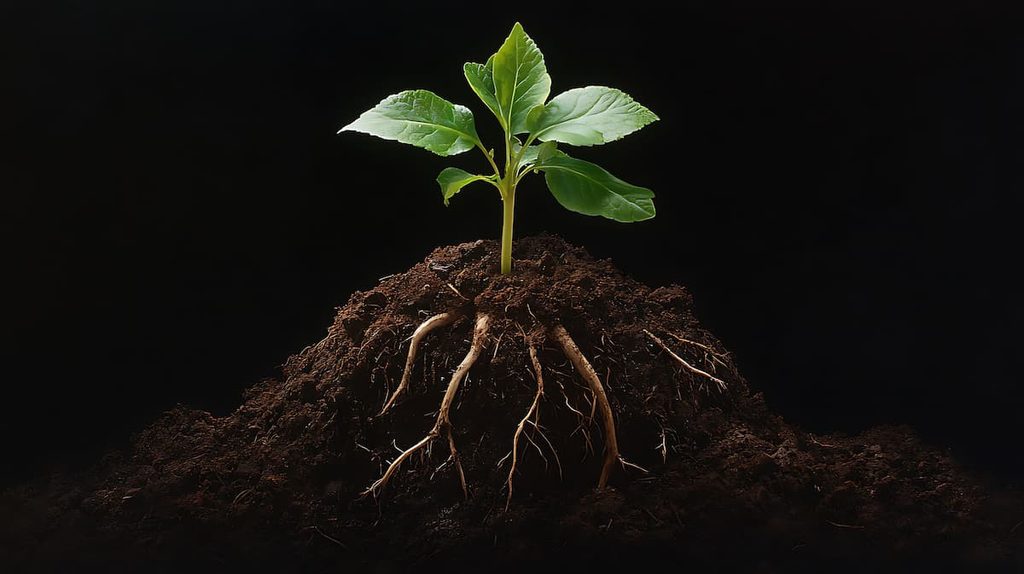
As they grow, plants produce many compounds. Some enter the surrounding soil through their roots, while others can be released as leaves and other plant material break down. Once in the environment, certain compounds can affect the development of nearby plants.
These chemicals are often called allelochemicals. Depending on the compound and the receiving species, exposure may interfere with seed germination or slow the growth of young roots and shoots.
The idea becomes especially interesting when researchers can connect a specific chemical to a measurable effect.
In one experiment, scientists investigated yellow fieldcress (Rorippa sylvestris), a plant that can release substances into the soil around its roots. They collected root exudates from flowering plants and identified compounds including hirsutin and pyrocatechol.
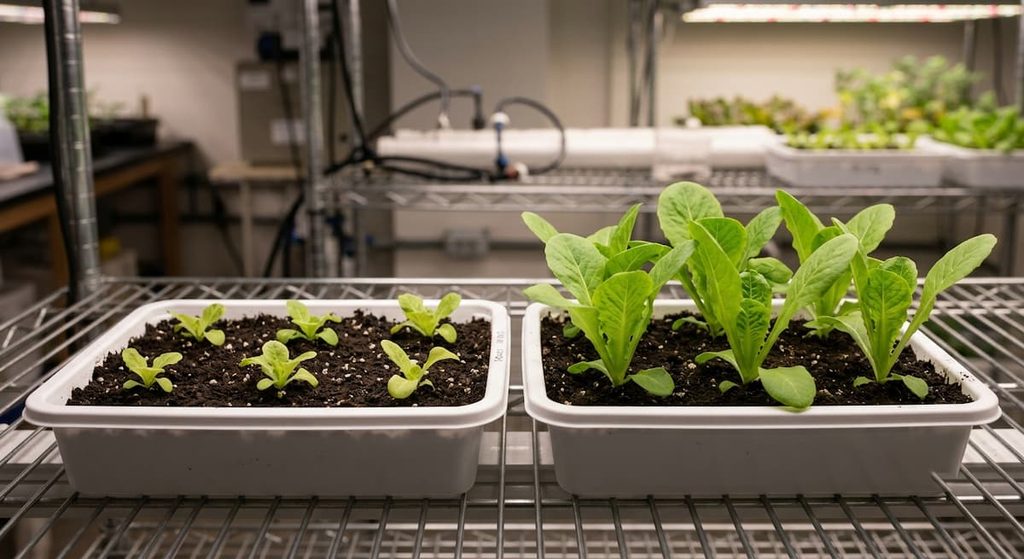
When lettuce seedlings were exposed to the collected substances, their growth was inhibited. Tests involving combinations of the identified compounds also produced inhibitory effects.
This is a useful example because the researchers did more than observe that lettuce grew poorly near yellow fieldcress. They investigated what the plant released and tested whether those substances could affect another species.
That distinction matters. A plant may contain a potentially harmful chemical without releasing enough of it to affect its neighbors. To demonstrate allelopathy, scientists need evidence connecting the chemical to the biological response.
Some Cucumbers Are Better at Suppressing Other Plants
Allelopathy is not equally strong in every plant, even within the same species.
An experiment involving cucumber varieties from 41 countries revealed striking differences in their ability to inhibit other plants. Researchers grew the cucumber varieties alongside indicator plants and compared the resulting growth.
One cucumber introduction inhibited the growth of the indicator plants by 87%. Another 25 introductions reduced growth by at least 50%.
The researchers also collected liquid that had passed through soil containing inhibitory cucumber plants. When this liquid was used in separate tests, it affected the growth of indicator plants that had not been growing beside the cucumbers.
That result suggested that substances released by some cucumber plants contributed to their ability to suppress neighboring plants.
Think about what this means for agriculture. Two varieties of the same crop may look similar to a farmer but differ in their effects on nearby weeds. If researchers can identify the traits responsible for that difference, they may be able to use them to improve weed management.
There is an important limitation, though. The experiment did not show that every cucumber variety is a powerful weed suppressant. Nor did it establish that the same degree of inhibition would occur in every field.
Allelopathy is a potential advantage, not a guarantee of victory over neighboring plants.
Why a Chemical That Works in a Lab May Fail in the Soil
Imagine finding a chemical that stops a seedling from growing. It might seem like an ideal natural weed killer.
But before celebrating, scientists must answer a more difficult question: how much of that chemical would the seedling actually encounter outdoors?
In a laboratory, researchers can control the amount of a substance applied to a seed. In the soil, the situation is less predictable. Water may dilute the compound. Soil particles may bind it. Microorganisms may break it down or transform it into other substances.
The concentration reaching a neighboring plant can therefore be very different from the concentration used in an experiment.
The receiving species matters, too. A substance that strongly affects lettuce seedlings might have a weaker effect on a particular weed, or it might affect that weed at a different stage of development.
This is why a simple observation can be misleading. If few plants grow beneath a tree or shrub, allelopathy is only one possible explanation. The plant may also be casting deep shade, using much of the available water, or changing the soil in other ways.
To find out what is happening, researchers must separate these possible effects as carefully as possible.
A Surprising Twist: A Plant Can Suppress Its Neighbors and Help Them
The challenge becomes clearer when scientists study plants in their natural surroundings.
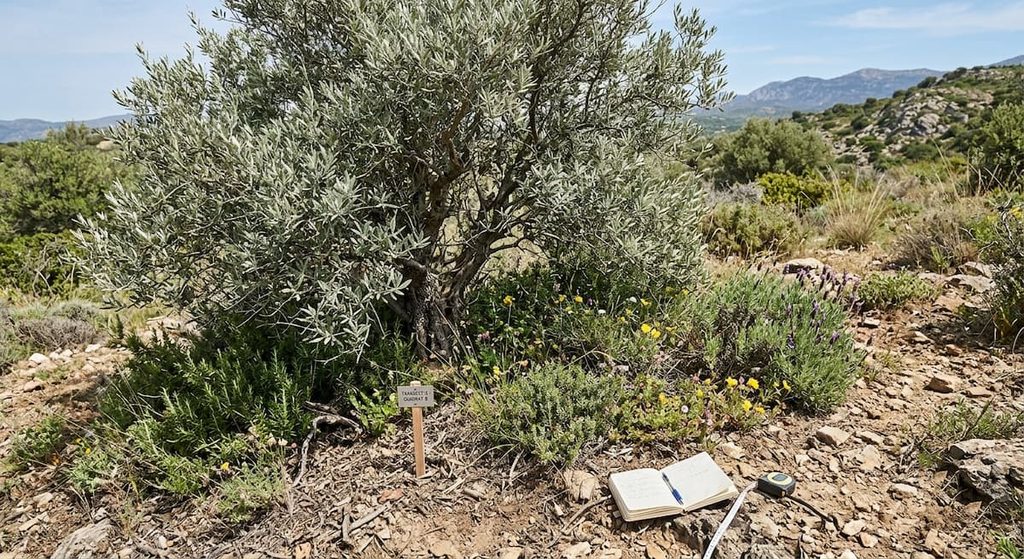
In a two-year field experiment in northeastern Spain, researchers investigated a shrub called Artemisia herba-alba and three other plant species that shared its habitat. They examined how the neighboring plants grew beneath the shrub and compared conditions in which activated carbon was added to the soil with conditions in which it was not.
Activated carbon can bind certain organic compounds, making it useful for investigating possible chemical effects. However, it is not a perfectly selective tool, so the results must be interpreted cautiously.
The experiment revealed that the shrub’s influence was not simply harmful. The outcome differed among neighboring species, and some plants benefited from growing beneath its canopy. Under conditions of particularly severe environmental stress, the benefits of the local microclimate could outweigh the negative effects associated with chemical interference.
This is a very different picture from the idea of a plant releasing chemicals to clear away every competitor.
A shrub may create shade that protects a smaller plant from extreme heat while also releasing compounds that interfere with its growth. The smaller plant experiences both influences at once. Depending on the species and environmental conditions, the benefits may outweigh the costs.
The same shrub can therefore have different effects on different neighbors.
This also explains why a bare patch beneath a plant cannot prove allelopathy on its own. Scientists must determine whether chemical interference is actually occurring and how much it contributes to the final outcome.
Rye and Pigweed: A Chemical Contest Between Crop and Weed
Allelopathy is not just an ecological curiosity. Researchers are also investigating whether it could help farmers manage weeds.
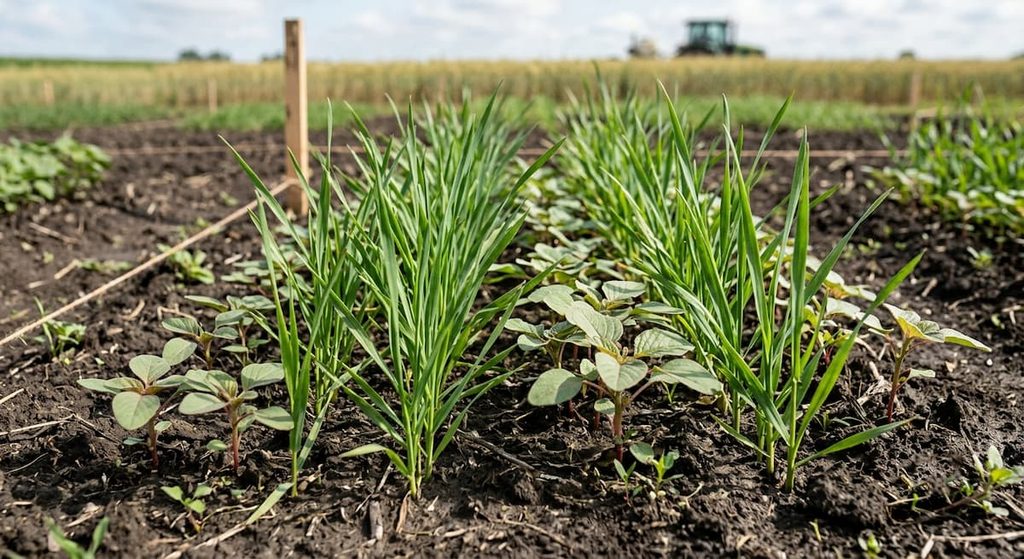
A 2024 experiment examined rye (Secale cereale) growing alongside redroot pigweed (Amaranthus retroflexus), a weed that can compete with crops.
The researchers found that pigweed growth was reduced when rye was present under the experimental conditions. Pigweed germination was also reduced in tests involving rye.
At the same time, the researchers measured chemicals called benzoxazinoids in rye. Two of these compounds, DIBOA and DIMBOA, were identified in the plants. Rye growing alongside pigweed showed increased production of these compounds, and the pattern varied with the plants’ developmental stages and growing arrangements.
The findings suggest that chemical interactions between neighboring plants can change as the plants develop. The relationship is not necessarily fixed from germination to maturity.
But this was a specific rye-pigweed model, not proof that rye will suppress every weed in every field. The timing of planting, the age of the plants, soil conditions, and other factors can all influence the outcome.
The experiment nevertheless provides a useful direction for agricultural research: instead of simply searching for plants that produce inhibitory chemicals, scientists can investigate how those chemicals behave when crops and weeds grow together.
Could Allelopathy Become a More Useful Weed-Control Tool?
Farmers already use cover crops and plant residues to help manage weeds. These approaches can suppress unwanted plants through several mechanisms, including shading, changes in soil conditions, and the release of chemical compounds.
Allelopathy may contribute to that suppression, but it is important not to confuse the combined effect of a cover crop with proof of a chemical mechanism.
For example, a thick layer of plant residue can prevent light from reaching weed seeds. It may also change the temperature and moisture of the soil. If fewer weeds emerge, those physical effects could explain some or all of the difference.
To establish a chemical contribution, researchers need experiments that distinguish allelopathy from these other mechanisms.
The long-term goal is not simply to find a plant that can inhibit another plant in a laboratory. It is to identify crops or growing strategies that suppress troublesome weeds reliably under real agricultural conditions, without creating unacceptable effects on crops or other organisms.
That makes allelopathy promising, but still a subject that requires careful testing.
Plants Are More Than Competitors for Sunlight
The next time you see a patch of ground where one plant dominates and others struggle, remember that the explanation may involve more than sunlight and water.
Some plants release chemicals that can affect their neighbors. Experiments with yellow fieldcress, cucumber, and rye demonstrate that these effects can be measured and investigated. Field research also shows why their ecological importance cannot be judged from laboratory results alone.
The most interesting part of allelopathy is not the idea that plants can chemically attack one another. It is that the same plant can inhibit one neighbor, benefit another, and behave differently as conditions change.
Plant communities emerge from these overlapping interactions. Understanding them can help scientists explain patterns in nature and explore new approaches to agriculture, while reminding us that even a seemingly simple patch of vegetation may be the result of several competing biological forces.
Scientific Sources
- Yamane A, Nishimura H, Mizutani J. “Allelopathy of yellow fieldcress (Rorippa sylvestris): Identification and characterization of phytotoxic constituents.” Journal of Chemical Ecology. 1992;18(5):683-691. PMID: 24253962. DOI: 10.1007/BF00994606. Read the study on PubMed
- Putnam AR, Duke WB. “Biological suppression of weeds: evidence for allelopathy in accessions of cucumber.” Science. 1974;185(4148):370-372. PMID: 17794306. DOI: 10.1126/science.185.4148.370. Read the study on PubMed
- Arroyo AI, Pueyo Y, Giner ML, Foronda A, Sanchez-Navarrete P, Saiz H, Alados CL. “Evidence for chemical interference effect of an allelopathic plant on neighboring plant species: A field study.” PLOS ONE. 2018;13(2). PMID: 29474430. DOI: 10.1371/journal.pone.0193421. Read the study on PubMed
- Mushtaq W, Fauconnier ML, de Clerck C. “Assessment of induced allelopathy in crop-weed co-culture with rye-pigweed model.” Scientific Reports. 2024;14(1):10446. PMID: 38714777. DOI: 10.1038/s41598-024-60663-w. Read the study on PubMed