How Frozen Frogs Come Back to Life [Bit#186]
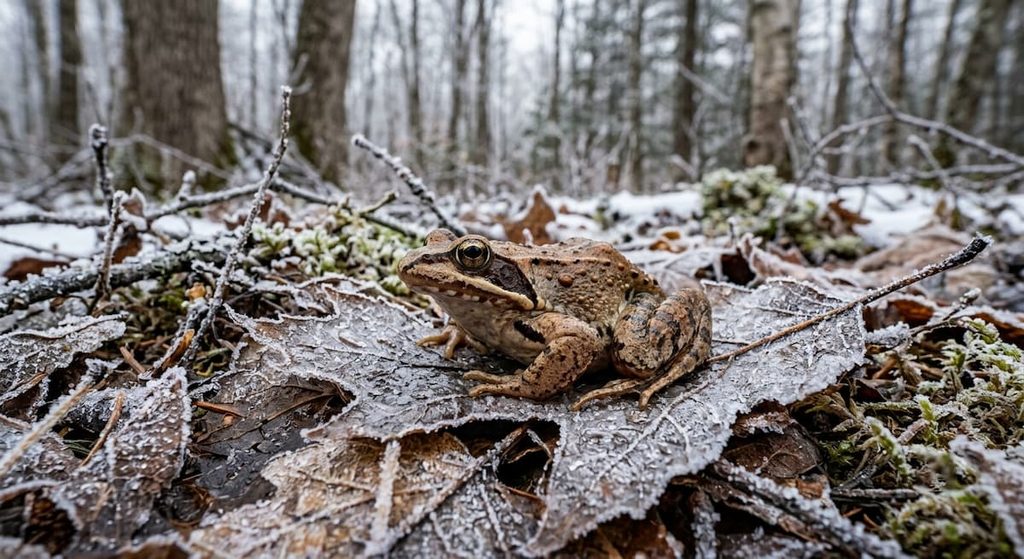
In winter, a wood frog can become so thoroughly frozen that its heart stops beating and its breathing ceases. Its body may be covered in ice, and much of the water inside its tissues becomes solid. To an observer, the animal can appear dead.
Yet when temperatures rise and the ice melts, the frog can gradually return to an active state. Its heart starts beating again, breathing resumes, and eventually it can move around.
This is not a trick of appearance. The wood frog (Rana sylvatica), a species native to North America, has a remarkable biological ability called freeze tolerance. Instead of preventing all ice from forming, it can survive a limited amount of freezing while protecting its cells from damage.
The secret lies partly in a familiar substance: glucose, the same simple sugar that cells normally use for energy. During freezing, however, the frog uses glucose for a second purpose. It becomes a natural cryoprotectant, helping tissues withstand conditions that would severely injure many other animals.
The Difference Between Avoiding Ice and Surviving It
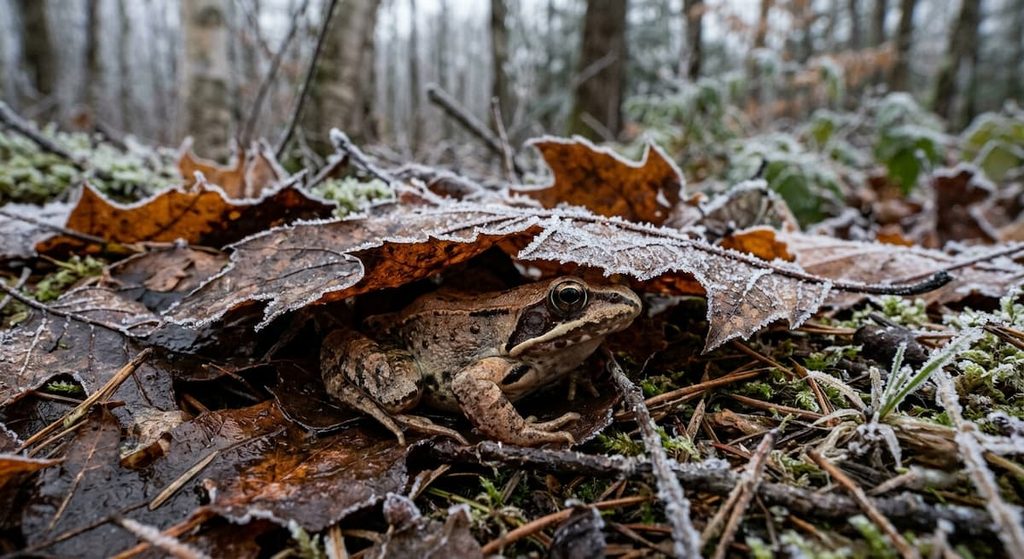
Most animals that encounter freezing temperatures must prevent ice from forming inside their bodies or find a warmer place to escape the cold. Ice crystals can damage cell membranes, disrupt the movement of water and solutes, and injure delicate tissues.
Wood frogs follow a different strategy. They tolerate ice formation in parts of their bodies, particularly in spaces outside their cells. Ice can form beneath the skin and in body cavities, while the animal’s vital organs and cells must endure the resulting changes in their environment.
This distinction is essential. The frog does not simply turn into a solid block of ice without consequences. Its survival depends on controlling how freezing progresses and limiting the damage it causes.
When ice forms outside cells, relatively pure water becomes incorporated into ice crystals. Dissolved substances are left behind in the remaining liquid, making that fluid more concentrated. Water can then move out of cells toward the increasingly concentrated extracellular environment.
Some water loss helps limit intracellular ice formation, which can be especially destructive. But excessive dehydration and concentrated solutes can also injure cells. The frog must therefore manage a difficult balance: tolerate freezing while preventing the process from becoming lethal.
The Liver Produces a Natural Cellular Protectant
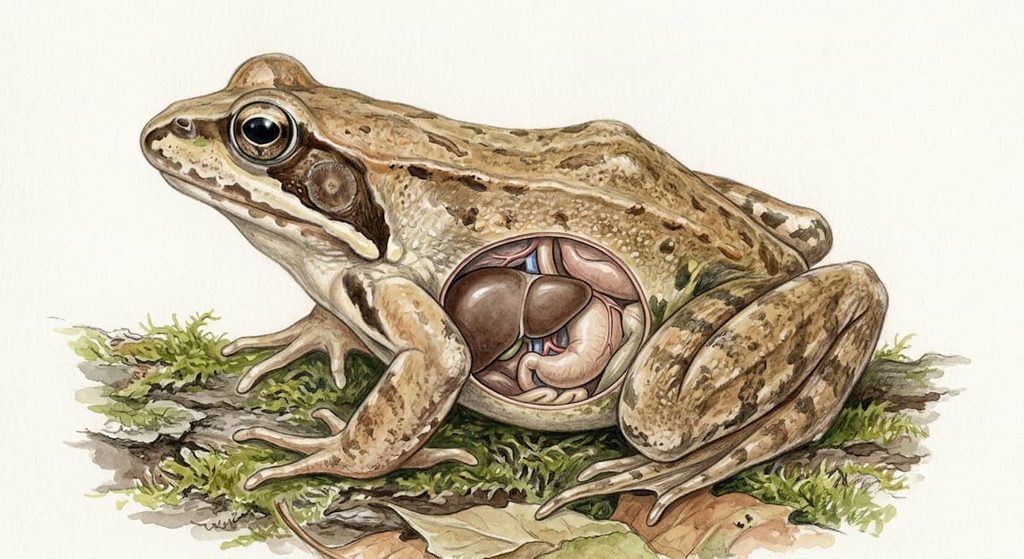
Before winter freezing occurs, wood frogs build up energy reserves, including glycogen in the liver. Glycogen is a large molecule made from many linked glucose units. Animals store it because it can be broken down when energy is needed.
When freezing begins, the frog rapidly mobilizes this reserve. Enzymes break down liver glycogen, releasing glucose that enters the bloodstream and reaches tissues throughout the body.
This response is unusually important because the glucose is not being used only as fuel. It also helps protect cells during freezing.
Experiments have demonstrated how closely glucose levels are connected to freeze tolerance. In a 1993 study, researchers increased glucose concentrations in wood frogs by injecting glucose before experimental freezing. Most glucose-loaded frogs survived freezing to −5°C, whereas all saline-injected controls died under those experimental conditions.
The result provides direct evidence that glucose availability can influence the frog’s ability to withstand freezing. It does not mean that glucose alone guarantees survival at any temperature. The experiment tested a particular species, population, and set of laboratory conditions.
The timing of glucose delivery matters, too. As freezing progresses, circulation eventually slows and stops. The frog must therefore mobilize and distribute protective substances early enough for them to reach vulnerable tissues.
A frog cannot wait until it has completely frozen and then begin preparing its cells. Its defense must start while the body is still capable of carrying out the necessary physiological responses.
How Glucose Helps Cells Withstand Freezing
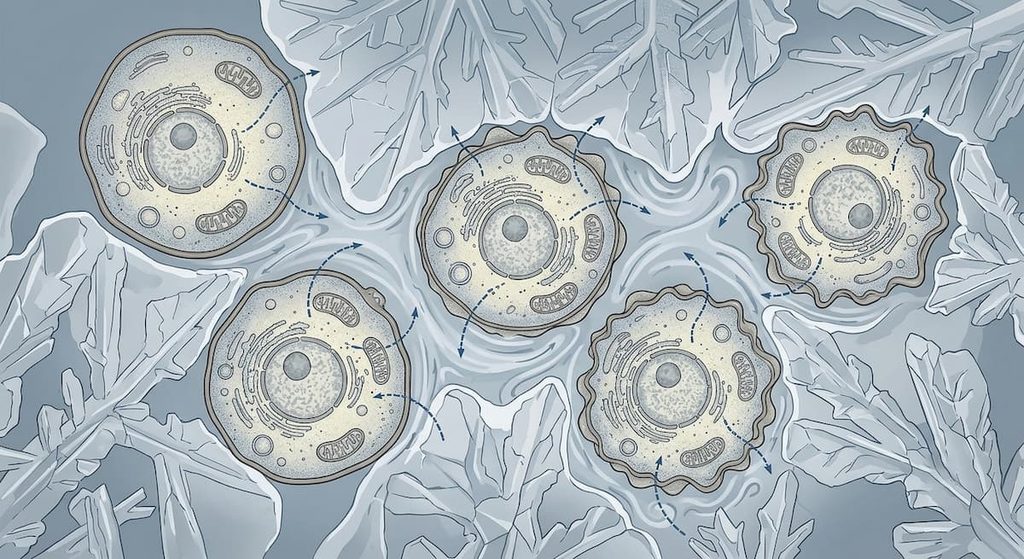
Glucose is not an antifreeze in exactly the same sense as the specialized antifreeze proteins found in some polar fish. Those proteins can bind to ice surfaces and interfere with ice-crystal growth. Wood frogs rely heavily on a different strategy: increasing the concentration of protective small molecules throughout their tissues.
Several effects contribute to glucose’s protective role.
First, glucose helps change the physical and chemical environment of cells as ice forms. By increasing the concentration of dissolved substances, it contributes to the osmotic conditions that influence water movement. It can help reduce the amount of ice formed under certain conditions and lessen the stress associated with freezing.
Second, glucose helps cells cope with the concentrated solutions that develop as extracellular water freezes. Cell membranes and the proteins inside cells are vulnerable to changes in water balance and solute concentration. A high glucose concentration can help limit some forms of freezing injury.
Third, the distribution of glucose throughout the body matters. The heart, liver, skeletal muscles, and blood all need to withstand freezing-related stress. Protective substances concentrated in only one organ would not provide the same whole-body defense.
Research on wood frog tissues has found that elevated glucose levels can reduce ice content and damage to red blood cells. These findings support a protective role for glucose, although they do not imply that every cell is completely shielded from injury.
Glucose is also not the frog’s only defense. Water movement, tissue structure, seasonal preparation, and changes in metabolism all contribute to survival. Freeze tolerance is a coordinated physiological response rather than the effect of one miraculous chemical.
What Happens to the Frog’s Heart?
One of the most striking features of wood frog freezing is the loss of a detectable heartbeat.
As freezing progresses, the heart initially continues to beat. Eventually, as the animal becomes more extensively frozen, cardiac activity stops. Circulation ceases, breathing stops, and ordinary movement is no longer possible.
This creates a major biological challenge. The frog must survive a period in which oxygen delivery and normal energy production are severely restricted.
During this time, its metabolic activity is greatly reduced. The animal cannot continue operating as it would in warmer conditions. Instead, it relies on its ability to tolerate low temperatures, reduced oxygen availability, and the physiological disturbances associated with freezing.
Glucose has a dual importance here. It helps protect tissues against freezing injury, while the frog’s altered metabolism allows it to endure a prolonged period of greatly reduced physiological activity.
However, it would be misleading to say that glucose keeps the heart beating throughout the frozen state. The heart can stop completely. Glucose helps protect the tissues that must function again after thawing.
Thawing Is a Recovery Process, Not an Instant Awakening
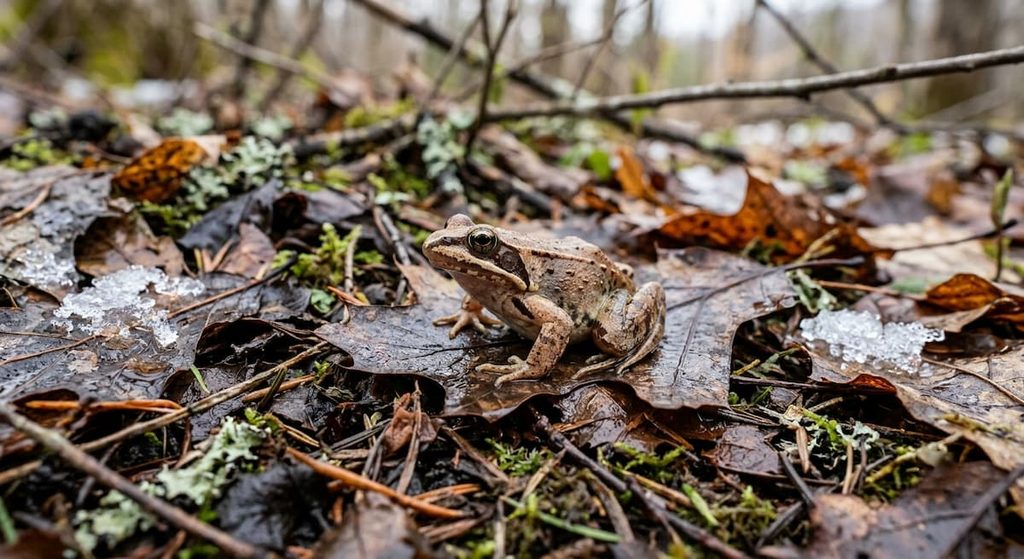
When temperatures rise, ice begins to melt and the frog’s tissues gradually return to a liquid state. But melting alone does not instantly restore normal physiology.
Researchers studying wood frogs frozen at approximately −2 to −3°C for 24 hours found that cardiac function was the first measured physiological function to return during thawing. Breathing and hindlimb reflexes followed. Not every frog displayed every measured response during the observation period.
The recovery process reflects the different demands placed on the body’s systems. Restored circulation helps deliver oxygen and other substances to tissues. Breathing can then resume, and muscular activity can return as the animal’s temperature and physiological condition improve.
The researchers also compared rapid and slow thawing. Although physiological functions returned sooner with rapid thawing, this did not improve overall survival in their experiment. This is an important reminder that the speed of one visible response does not necessarily determine whether an animal survives.
The frog’s ability to recover depends on how much injury occurred during freezing, how long the animal remained frozen, the temperature reached, and other environmental and physiological factors.
A successful thaw is therefore the final stage of a process that began before the frog froze. Seasonal preparation, protective chemistry, and the capacity to recover all contribute to the outcome.
Not All Wood Frogs Survive the Same Cold
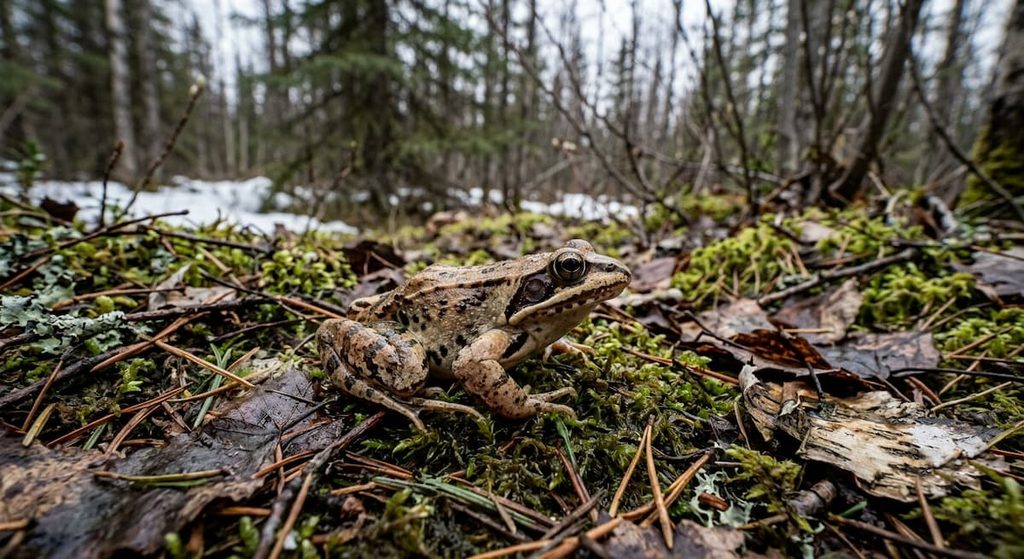
The phrase “frozen frog” can create the impression that the species has a universal ability to survive any winter. In reality, freeze tolerance has limits, and those limits can differ substantially between populations.
A 2013 study investigated wood frogs from Interior Alaska, near the northern edge of the species’ range. These frogs had accumulated substantial liver glycogen during winter preparation and had elevated levels of compounds such as urea. Researchers found that some survived experimental freezing at temperatures as low as −16°C.
The same study reported that the Alaskan frogs endured two months of freezing at −4°C. These are remarkable results, but they describe a particular northern population, not every wood frog everywhere.
The researchers also found differences between the Alaskan frogs and frogs from southern Ohio. The northern frogs had greater reserves and different concentrations of compounds associated with freeze tolerance. Their results suggest that geographic adaptation can influence how well a population withstands extreme winter conditions.
The distinction matters because survival is not determined by temperature alone. The duration of freezing, the rate of cooling, the animal’s prior acclimatization, and its physiological reserves can all affect the outcome.
A frog that survives one experimental freezing treatment might not survive a colder, longer, or more rapid freeze. Even within a species known for freeze tolerance, the limits of survival are biologically meaningful.
Why This Ability Matters Beyond Frogs
The wood frog offers scientists a natural example of how living tissues can survive freezing and recover afterward. Its strategy combines the regulation of water, the production of protective solutes, and the suppression of normal physiological activity.
Understanding these mechanisms may help researchers investigate how cells respond to freezing during biological preservation. Scientists already use cryoprotective substances in laboratory and medical settings to reduce damage during the freezing and thawing of cells. Yet a frog’s natural adaptations cannot simply be transferred to human organs or tissues. Different cells have different structures, metabolic requirements, and sensitivities to ice.
The value of studying wood frogs is that they reveal how several protective mechanisms can work together in a living animal. Their survival is not explained by a single ingredient, nor does it show that freezing is harmless.
Instead, the frog has evolved a way to tolerate a process that normally threatens cell integrity and organ function. Glucose is central to this response, but its effectiveness depends on the rest of the animal’s physiology.
When spring arrives, the frog’s return to activity is the visible result of that coordinated defense. What looks like life returning from death is, biologically, the recovery of an organism that survived an extraordinary period of suspended function.
The most remarkable part is not that ice can form inside a living animal. It is that the frog can control the damage well enough for its heart, muscles, and other systems to work again once the conditions become favorable.
Scientific Sources
1. Costanzo JP, Lee RE Jr, Lortz PH. “Glucose concentration regulates freeze tolerance in the wood frog Rana sylvatica.” Journal of Experimental Biology. 1993;181(1):245-255. PMID: 8409827. DOI: 10.1242/jeb.181.1.245. Read the study on PubMed.
2. Layne JR Jr, First MC. “Resumption of physiological functions in the wood frog (Rana sylvatica) after freezing.” American Journal of Physiology. 1991;261(1 Pt 2):R134-R137. PMID: 1858939. DOI: 10.1152/ajpregu.1991.261.1.R134. Read the study on PubMed.
3. Storey KB. “Organ-specific metabolism during freezing and thawing in a freeze-tolerant frog.” American Journal of Physiology. 1987;253(2 Pt 2):R292-R297. PMID: 3618830. DOI: 10.1152/ajpregu.1987.253.2.R292. Read the study on PubMed.
4. Costanzo JP, do Amaral MCF, Rosendale AJ, Lee RE Jr. “Hibernation physiology, freezing adaptation and extreme freeze tolerance in a northern population of the wood frog.” Journal of Experimental Biology. 2013;216(Pt 18):3461-3473. PMID: 23966588. DOI: 10.1242/jeb.089342. Read the study on PubMed.