[Bit#108] The Mitochondrial Twist: The Evolutionary Secret of Maternal Cellular Energy
Introduction
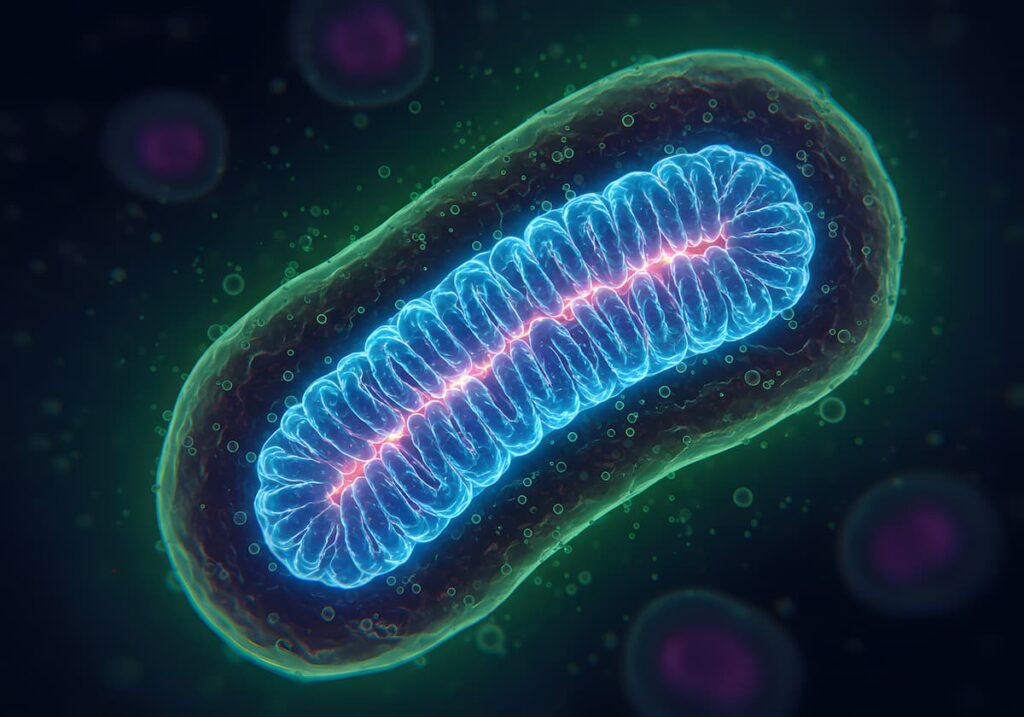
We inherit half of our genes from each parent. However, the mitochondria that produce energy inside our cells come exclusively from our mothers. Paternal mitochondria vanish without a trace during fertilization. Why did nature select such an asymmetrical inheritance method? Is it a simple biological coincidence, or a sophisticated evolutionary survival strategy? This article deeply explores the evolutionary secrets hidden behind maternal inheritance and its impact on human survival.
1. A Gift from Mom: Why Are Mitochondria Transferred Only Through the Maternal Line?
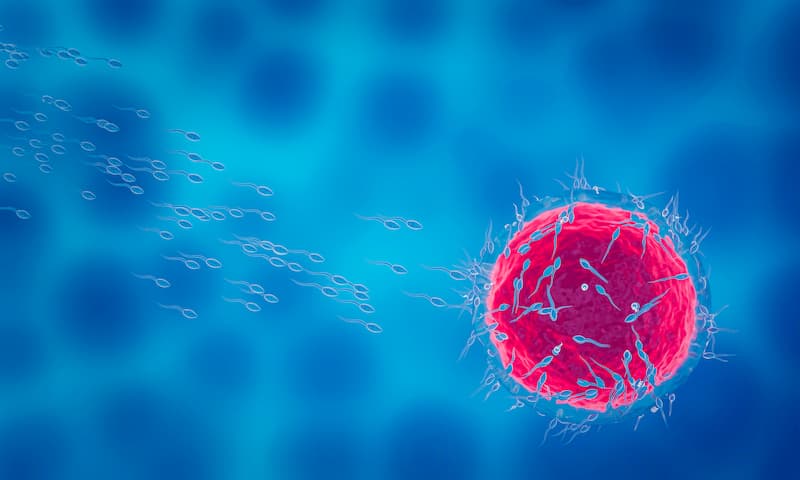
Every cell in our body contains a tiny power plant that generates energy. That power plant is the mitochondrion. Surprisingly, we inherit this organelle solely from our mothers. Sperm supplied by fathers also contain mitochondria, so why does this phenomenon occur?
When looking at the biological mechanisms that completely exclude paternal mitochondria during fertilization, the results are astonishing.
Sperm must swim vast distances toward the egg. To gain the necessary propulsion, a large concentration of mitochondria is placed specifically in the sperm tail. Conversely, the egg prepares abundant mitochondria distributed throughout its entire cytoplasm in advance.
When the sperm finally penetrates the egg membrane, the sperm tail, containing most of the mitochondria, is shed and left outside like peeling an eggshell.
What happens if a portion of paternal mitochondria enters the egg? The fertilized egg immediately recognizes the incoming paternal mitochondria as foreign invaders or defective parts. It then activates a powerful internal cleaning system known as autophagy.
This system attaches protein markers to the paternal mitochondria, prompting them to self-destruct. Why does the egg so thoroughly block paternal mitochondria and preserve only maternal ones?
The reason lies in a precise quality control strategy for survival. This choice reflects an ancient evolutionary strategy designed to guarantee the stability of cellular powerhouses.
2. The Brutal Reason Paternal Mitochondria Are Destroyed After Fertilization
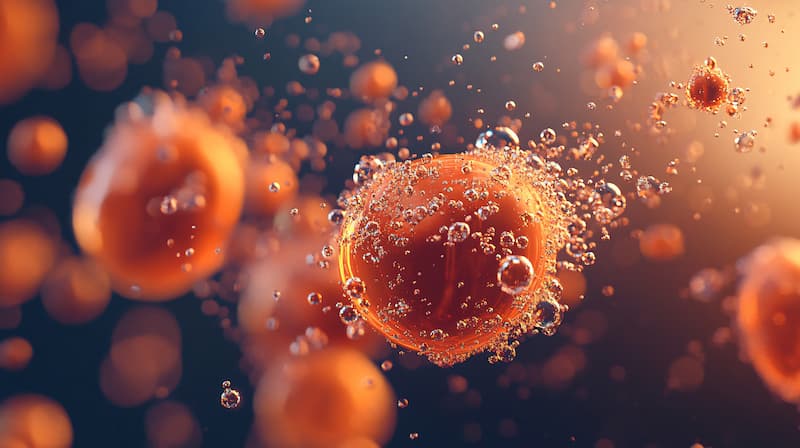
Paternal mitochondria that breach the inside of the fertilized egg are ruthlessly destroyed by the egg cell. This process goes beyond physical exclusion; it is a chemical execution. Why does the cell go to such lengths to eliminate paternal mitochondria?
Sperm mitochondria are inherently severely damaged. As sperm swim toward the egg at explosive speeds, the mitochondria packed in their midpiece generate massive amounts of energy.
The problem is that this high-speed generation inevitably produces large quantities of toxic reactive oxygen species as a byproduct. These reactive oxygen species indiscriminately attack and damage the internal mitochondrial DNA. Consequently, right before fertilization, the sperm mitochondria reach a critical state filled with accumulated genetic mutations and structural damage.
What if damaged paternal mitochondria remained intact? The newly formed embryo would receive distorted energy from its very first cell division. The cell metabolic balance would collapse, facing an extreme situation that threatens survival itself.
To block this risk in advance, the egg activates an organic destruction mechanism. The moment sperm enters, enzymes inside the egg attach a death sentence marker protein called ubiquitin to the surface of paternal mitochondria.
Mitochondria marked by ubiquitin are broken down into pieces and completely digested by the intracellular autophagy machinery. This is a highly precise cleanup mechanism that detects and eliminates defective external components.
The cold execution of paternal mitochondria is the most perfect defense barrier evolved by life to maintain its purity and health.
3. Attack of Reactive Oxygen Species: Life’s Last Stand Against Mutation
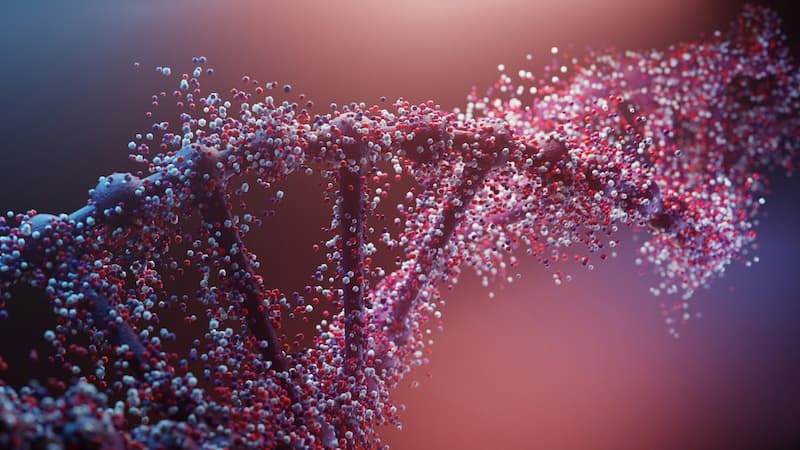
Unlike the cell nucleus, mitochondria possess their own unique genetic material, known as mitochondrial DNA. Nuclear DNA is tightly wrapped in protective proteins. In contrast, mitochondrial DNA remains completely exposed to the cytoplasm without protective shielding.
Why does mitochondrial DNA exist in such a vulnerable state? It is because mitochondria were once independent bacteria that entered cells long ago to begin a symbiotic relationship.
During energy production, reactive oxygen species are inevitably poured out. Reactive oxygen species are toxic substances that destroy cellular tissues. Unshielded mitochondrial DNA takes the brunt of these attacks. As a result, its probability of genetic mutation is more than ten times higher than that of nuclear DNA.
What if paternal and maternal mitochondria were mixed inside the fertilized egg? Mitochondria with different mutation rates would coexist within a single cell.
The cell would fall into confusion regarding which mitochondria to use as a baseline. Energy production efficiency would plummet, potentially leading to cell death.
Selecting a single maternal lineage is a last stand to prevent such genetic chaos. It represents an evolutionary decision to maintain stability by controlling high-risk genes through a single channel.
4. In Search of Human Roots: Mitochondrial Eve and the Key to Evolution

The fact that mitochondria are transmitted purely through the maternal line triggered a massive revolution in human evolutionary biology. Unlike nuclear DNA, where paternal and maternal genes mix, mitochondrial DNA is passed unchanged from mother to daughter, and to her daughter in turn.
This means that gene mixing never occurs along the way. It functions as a biological time capsule.
Scientists focused on this unique genetic characteristic and began tracing back the mutation rate of mitochondrial DNA across diverse human populations worldwide.
They utilized the minute mutations occurring each generation like a clock measuring time. Where did the hands of that clock point?
Surprisingly, the roots of modern humanity converged on a single woman who lived in Africa roughly 150,000 to 200,000 years ago. Scientists named this woman Mitochondrial Eve.
A tiny organelle inside our cells proved that all of humanity descends from one common mother. Maternal inheritance of mitochondria is not just a life-support system; it has become the most definitive key to unlocking human migration paths and anthropological evolution.
Conclusion
In the energy we generate with every breath lies a chronicle of life passed continuously from mother to mother across eons. This single-lineage mitochondrial system, preserved by decisively excluding paternal genes, was the most sophisticated survival strategy chosen by life against uncertainty and mutation risks.
Had life tolerated imperfection and accepted paternal mitochondria, could humanity have evolved into what we are today? This strict selection inside microscopic cellular powerhouses proves that the essence of life rests upon continuous decisions to protect purity and stability.
![[Bit#67] The Science of Dying: What Happens in Our Final Moments](https://hiddenbitknowledge.com/wp-content/uploads/2026/06/main.morgue-768x430.jpg)
![[Bit#99] The Reality of Designed Babies in the Era of CRISPR Gene Editing](https://hiddenbitknowledge.com/wp-content/uploads/2026/07/main.CRISPR-Gene-Editing-768x526.jpg)
![[Bit#172] Why Facial Expressions Change: Unconcealable Brain Signals](https://hiddenbitknowledge.com/wp-content/uploads/2026/10/main.human-face-768x581.jpg)
![[Bit #153] Why Does Your Breath Turn White in the Cold? The Hidden Biology of Human Vapor](https://hiddenbitknowledge.com/wp-content/uploads/2026/09/main.winter-breath-768x512.jpg)
![[Bit#105] Forensic Genetics: Reconstructing Suspect Faces and Biological Traits from a Single Cell](https://hiddenbitknowledge.com/wp-content/uploads/2026/07/main.DNA-tracing-technology-768x544.jpg)
![[Bit#50] The Great Survival Strategy of Plant Hormones](https://hiddenbitknowledge.com/wp-content/uploads/2026/06/64472267701f-768x419.jpg)