[Bit#162] Why Do We Lose Hair When We Are Stressed?

We often say that extreme stress causes hair loss. Is this just a subjective feeling? Not at all. Stress is a clear biological process that directly attacks hair follicle cells through the nervous system and hormones. In this article, we explore the scientific mechanisms of how mental suffering leads to physical damage. We deep dive into the impact of unaddressed mental fatigue on scalp health and reflect on fundamental solutions.
1. Cortisol Surge and the Onset of Telogen Effluvium
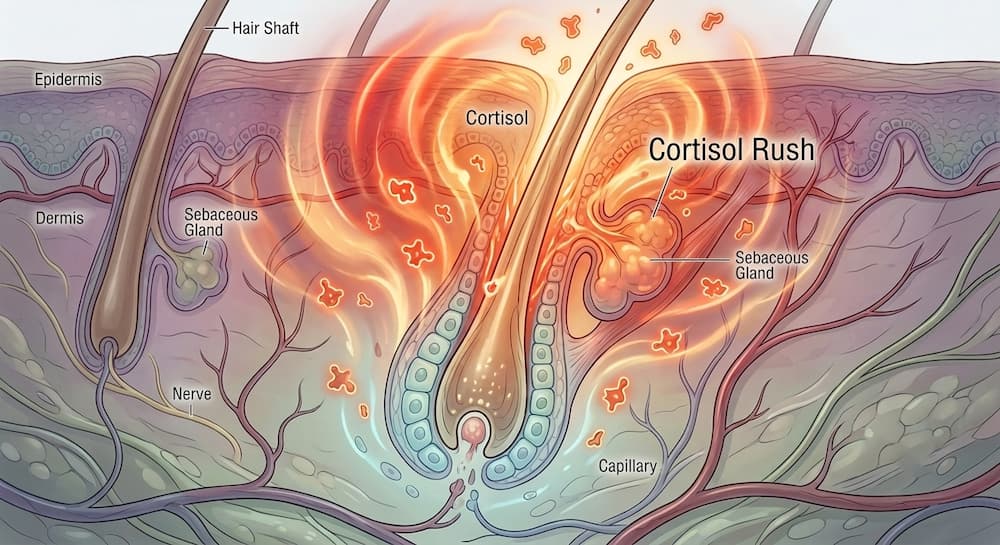
Why does hair suddenly fall out in clumps? The answer lies in our body’s emergency warning system. When under extreme stress, the brain immediately declares a state of emergency. At this time, the adrenal glands release large amounts of a hormone called cortisol. Cortisol is originally a protective defense hormone. However, when secreted continuously and excessively, it begins shutting down functions that are not directly critical for immediate survival. The very first victim is your hair.
Our hair follicles run on a periodic cycle consisting of an anagen phase, a catagen phase, and a telogen phase. Normally, more than 85 percent of hair remains in the anagen phase, experiencing rapid growth. However, the cortisol bomb entering through the bloodstream completely disrupts the signaling system of hair follicle cells. It forcefully halts the division of hair follicle cells and pushes hair that still has plenty of time to grow into the telogen phase prematurely. The growth phase abruptly comes to an end.
The bigger problem is that this process appears with a time lag. Hair that enters the telogen phase does not fall out immediately but hangs precariously in the follicle for about two to three months. Why is there a time gap between the moment of impact and the moment hair actually falls out? It takes time for hair with dead roots to be pushed out to the surface of the skin.
Ultimately, we confirm the scorecard of extreme stress experienced months ago right on the shower floor. Telogen effluvium induced by cortisol does not completely destroy the hair follicle itself. However, if the signaling system continues to break down, the hair follicle gradually shrinks and loses the power to return to the growth phase. Unless the surge of stress hormones is halted, the recovery of hair density becomes equally distant.
2. Constriction of Scalp Microvessels and Follicular Nutrient Deprivation
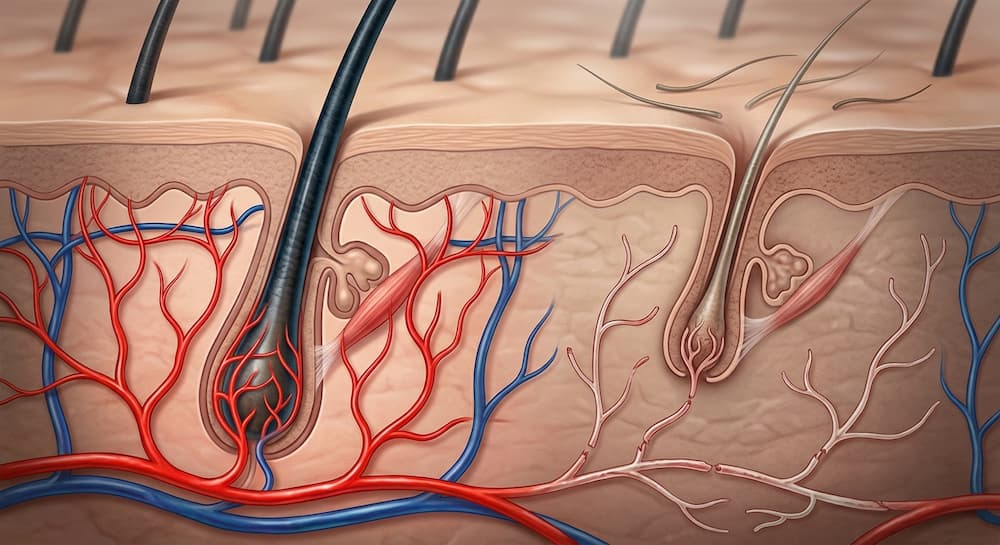
What kind of emergency occurs in our body when we experience sudden stress? The autonomic nervous system responds immediately. As the sympathetic nervous system becomes excessively excited, it releases large quantities of norepinephrine. This substance instantly narrows blood vessels throughout the entire body. It prioritizes redirecting blood flow to vital organs such as the heart or brain that are critical for immediate survival. Since survival is urgent, blood flow to other areas is significantly reduced.
What happens to the scalp and hair follicles, which are relatively lower on the priority list? The microvessels intertwined like a mesh underneath the scalp contract in an instant. Hair follicles are inherently delicate cellular factories that receive oxygen and various nutrients from microvessels to produce hair strand by strand. When blood vessels constrict tightly, the flow of blood supplied to hair follicles drops sharply. Hair follicle cells deprived of nutrient supply fall into a state of starvation right away. Can starving hair follicle cells continue to produce thick and strong hair?
When hair root cells suffer from severe nutrient deficiency, hair thickness thins out first. This occurs because the synthesis of keratin protein, which forms the solid structure of hair, comes to a stop. Weakened hair that has lost its strength at the root stops growing. Eventually, the growth rate slows down noticeably, and the hair falls out early, unable to withstand external stimuli. When hair follicles pass their limit of endurance, hair falls out helplessly.
The issue does not end here. Blood vessel constriction does not stop at blocking nutrient supply. It even blocks the pathway for discharging reactive oxygen species and waste materials left behind by cellular respiration. A double hardship occurs where toxins accumulate outside while nutrients are lacking inside. Ultimately, the rapid constriction of scalp capillaries cuts off the lifeline of hair follicle cells and serves as a decisive factor in accelerating hair loss.
3. Immune System Dysfunction Triggering Alopecia Areata
Persistent stress mercilessly disrupts the immune system, which serves as our body’s delicate guardian. Normal immune cells selectively attack only invading viruses or bacteria. However, when stress levels cross a critical limit, the immune system loses its ability to distinguish friend from foe.
Stress neurotransmitters cause fatal confusion in the self-recognition capabilities of immune cells. Why is this? It is due to the phenomenon where disoriented immune cells suddenly mistake normal tissues in our body for pathogens. At this time, the most vulnerable target exposed is the hair follicle inside the scalp.
Hair follicles originally possess a special protective shield called immune privilege. It is an inherent defense mechanism designed to hide the follicle from indiscriminate attacks by immune cells. However, ongoing stress collapses this shield in an instant. Aggressive T cells gather in swarms around the exposed hair follicle once the shield is dismantled.
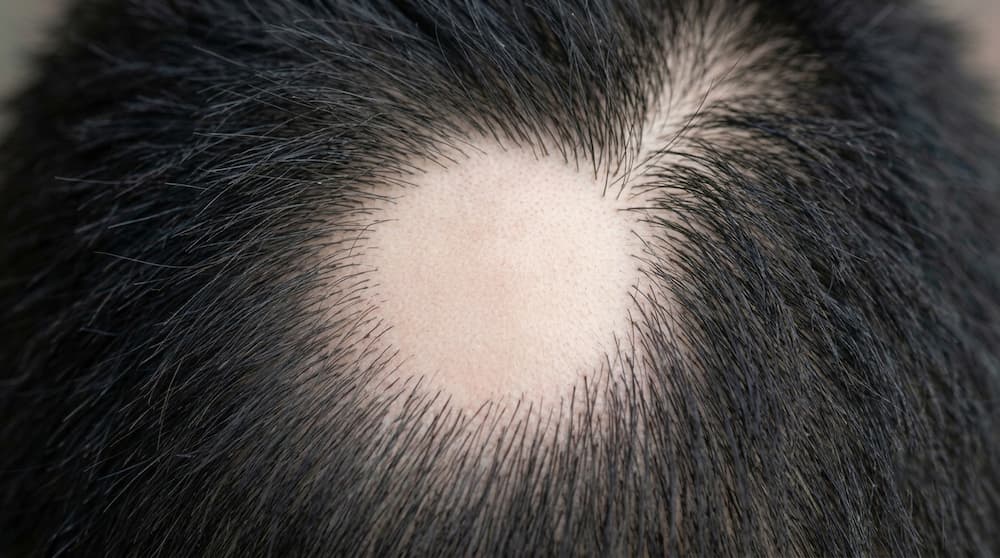
Immune cells judge the hair follicle as a foreign object that must be eliminated immediately and begin pouring out an indiscriminate barrage of inflammation. Alopecia areata is a representative disease caused when our own immune system attacks its own hair follicles in this manner. Hair follicle cells under persistent attack by T cells are destroyed while suffering from severe inflammatory reactions.
As the hair root is completely damaged, a clean, coin-sized patch of hair loss forms. In severe cases, countless hairs disappear without a trace within just a few days. Self-attack by the immune system triggered by stress goes beyond simple hair shedding and represents a dangerous hair loss mechanism that threatens the very survival of hair follicle cells.
4. Follicular Cell Recovery Mechanisms to Overcome Telogen Effluvium
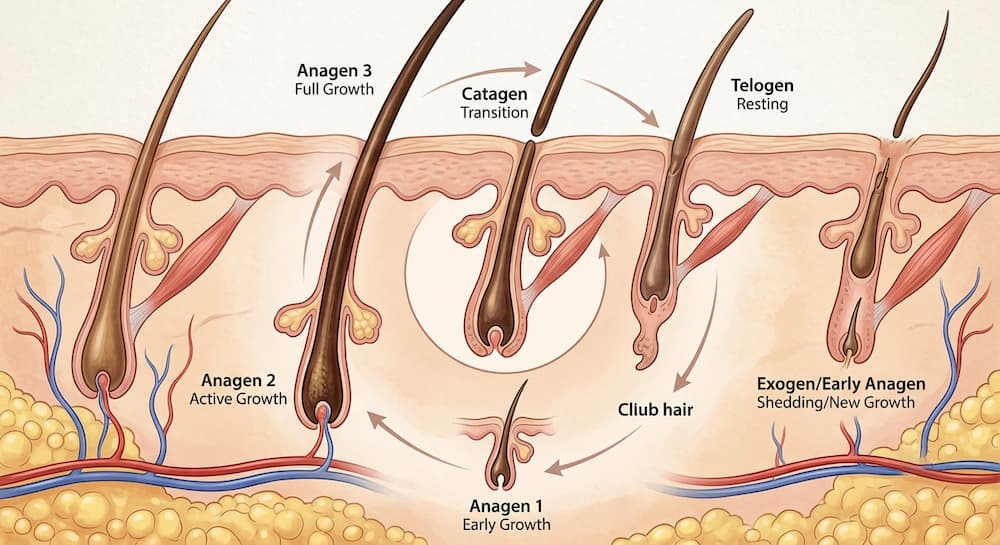
Can damaged hair follicles really come back to life? To state the conclusion first, hair follicles are extraordinary organs equipped with incredible regenerative capacity. When the root cause of stress disappears, hair follicle cells enter self-recovery mode. However, reduced hair density does not restore overnight. Why is this? It takes physical time for hair follicles to awaken from a long rest period and turn the growth phase signal back on.
The key players leading the regeneration of hair follicle cells are stem cells. Stem cells located at the lower part of the hair follicle finally become active when stress hormone levels return to normal. They resume cell division and begin building new hair shafts. At this time, scalp microvessels expand again, explosively supplying oxygen and nutrients to the hair follicles. The cellular factory that was once in a state of starvation gets restarted.
However, there is a crucial factor we must pay close attention to during the recovery process. That is the exact point when the signaling system of hair follicle cells becomes completely normalized. For hair follicles to produce thick and solid keratin protein again, a stable supply of nutrients must continue for at least three months or more. If exposed to strong stress again in the middle of this process, cells stop recovering and retreat back to the telogen phase. This is why persistent management of the scalp environment is necessary.
Ultimately, the core of overcoming stress-induced hair loss is awakening sleeping hair follicle stem cells. If you restore the balance of the autonomic nervous system and normalize scalp blood flow, hair follicles will surely regain their original vigorous productivity. Rather than feeling anxious about hair falling out in the shower room, you must give your body’s signaling system sufficient time to stand up again. The moment you lay down your stress, your hair follicles are already preparing to grow once again.
Conclusion
Through this exploration into the relationship between stress and hair loss, we have confirmed how closely connected our mind and body really are. The phenomenon of hair loss is not merely a change in appearance, but a desperate signal for rest sent by our body. Have we perhaps been obsessed only with hair volume while ignoring the life overload that exhausts our hair follicles? Taking the first step to fill an emptying scalp might actually begin with lightening the burdens on our minds.
![[Bit#9] Why We Must Die: The ‘Expiration Date’ Chosen by Evolution](https://hiddenbitknowledge.com/wp-content/uploads/2026/04/0348b8923730-768x585.jpg)
![[Bit#151] The Science of Shock Absorption in the Jaw Joint When Chewing Hard Food](https://hiddenbitknowledge.com/wp-content/uploads/2026/09/main.eat-meat-768x419.jpg)
![[Bit#173] Why Do Wounds Itch When They Heal?](https://hiddenbitknowledge.com/wp-content/uploads/2026/10/main.Healing-wound-768x419.jpg)
![[Bit#135] Why Humans Can’t Synthesize Vitamin C: The Secret of Genetic Mutation](https://hiddenbitknowledge.com/wp-content/uploads/2026/08/main.eat-vitamin-c-pill-768x512.jpg)
![[Bit#168] Why Tears from Sadness and Onions Are Chemically Different](https://hiddenbitknowledge.com/wp-content/uploads/2026/09/main.tear_-768x419.jpg)
![[Bit#164] The Real Reason Your Tongue Craves Fatty Foods](https://hiddenbitknowledge.com/wp-content/uploads/2026/09/main.fat-food-768x419.jpg)