Why Does Fat Accumulate Around the Belly? [Bit#214]
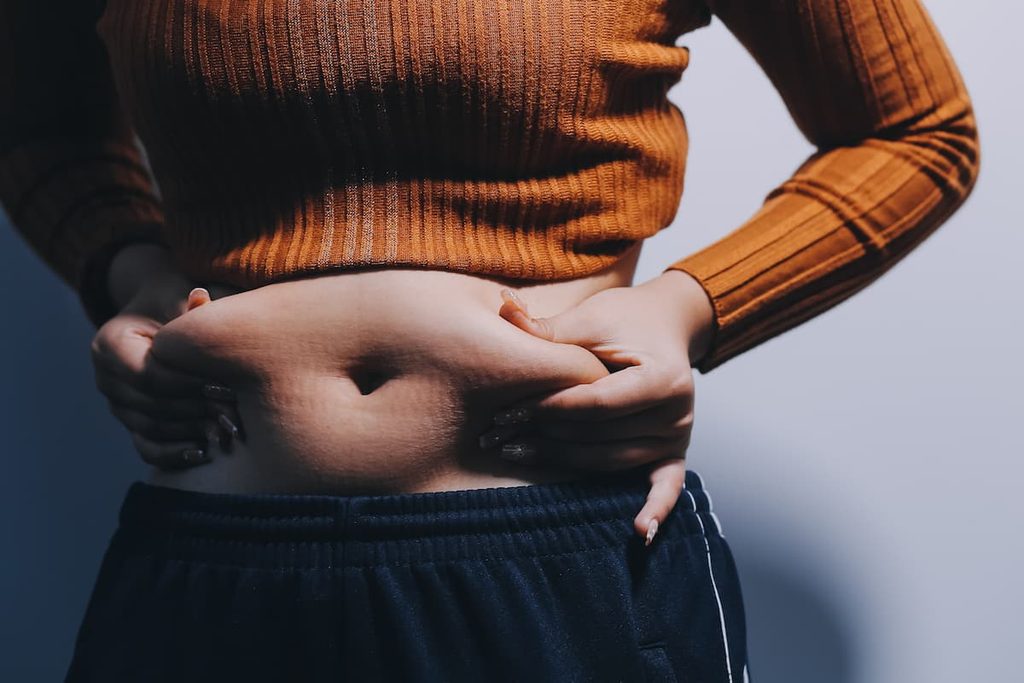
Why does weight gain seem to go straight to the belly for some people, while others gain more around their hips, thighs, or elsewhere?
It is tempting to think that body fat is simply excess energy packed into whatever space is available. If that were true, gaining weight should produce roughly the same pattern in everyone.
It does not.
People can have similar amounts of body fat but very different shapes. And even within the same person, the places that tend to store fat can change with age, sex hormones, and other biological factors.
That is because body fat is not one uniform storage compartment.
The body has several fat depots, and they do not all behave the same way. Genetics influence the distribution of those depots, hormones can shift the pattern, and the ability of adipose tissue to expand safely also affects where additional energy ends up.
So the deeper question is not simply why does the body store fat?
It is why does it store more of that fat here?
The fat around your belly is not all the same
When people say “belly fat,” they usually picture the fat that makes the abdomen look larger.
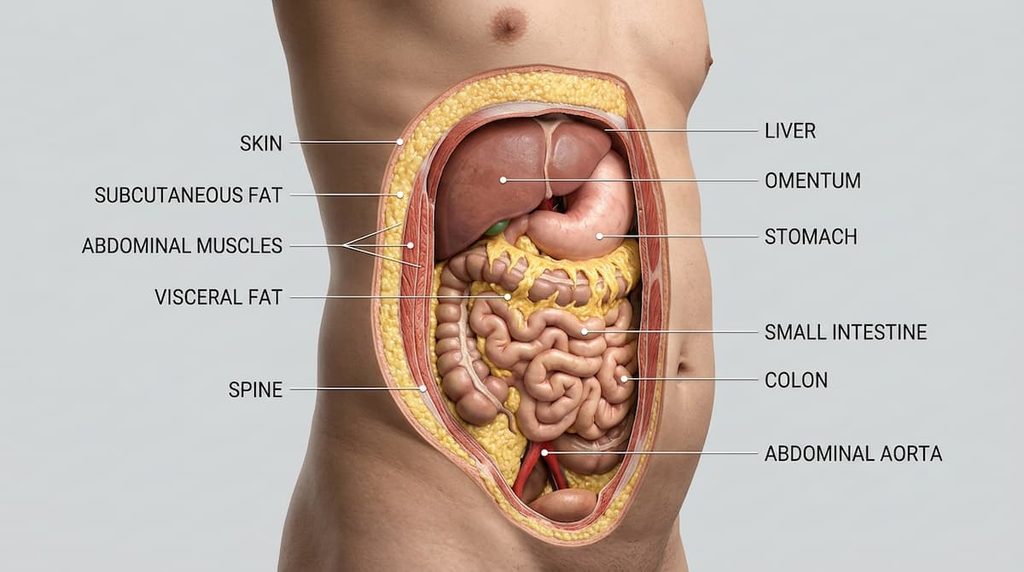
But some of that fat is directly beneath the skin. This is subcutaneous fat.
Another portion lies deeper inside the abdominal cavity around internal organs. This is visceral fat.
Both are fat tissue, but they are different anatomical depots with different biological properties.
This distinction matters because a visible belly does not tell you exactly how much visceral fat someone has. A person’s abdominal size can reflect subcutaneous fat, visceral fat, the shape of the abdominal cavity, muscle, and other factors.
Visceral fat is particularly important because higher amounts are associated with metabolic problems such as insulin resistance, type 2 diabetes, and cardiovascular disease.
But that does not mean that all visible belly fat is inherently harmful.
Subcutaneous fat is a normal and important energy-storage tissue. In fact, having places where excess energy can be stored in adipose tissue is part of the body’s normal metabolic system.
The real biological question is therefore not simply whether fat is present around the abdomen.
It is which fat depot is expanding, and how effectively can that depot store the extra energy?
Your genes influence where fat goes
One of the strongest clues comes from genetics.
Body fat distribution is a heritable trait. This does not mean that genes determine exactly where every gram of fat will go. It means that genetic differences contribute to the tendency to store more fat in some regions than others.
A major 2015 genetic study examined waist and hip measurements from up to 224,459 people.
The researchers identified dozens of genetic loci associated with body fat distribution. Many of the associated genes were connected to adipose tissue biology, adipocyte regulation, insulin resistance, and other processes involved in how fat tissue develops and functions.
An important finding was that some of these genetic effects differed between women and men.
This suggests that body shape is not merely the visible result of how much fat a person has.
The distribution itself has a biological basis.
A much larger MRI-based study published in 2022 made this idea even clearer.
Researchers analyzed up to 38,965 UK Biobank participants and measured three major fat depots: visceral fat, abdominal subcutaneous fat, and gluteofemoral fat around the hips and thighs.
They identified 250 independent common genetic variants associated with at least one fat-distribution trait.
Crucially, the researchers found evidence for depot-specific genetic architecture.
In simpler terms, the genetic influences associated with visceral fat were not simply identical to those associated with fat stored under the abdominal skin or around the hips and thighs.
That changes the way we should think about weight gain.
Your genes do not merely influence how much fat you tend to carry.
They also help influence where that fat tends to accumulate.
Fat tissue itself can change the outcome
Genes provide part of the blueprint, but the behavior of fat tissue also matters.
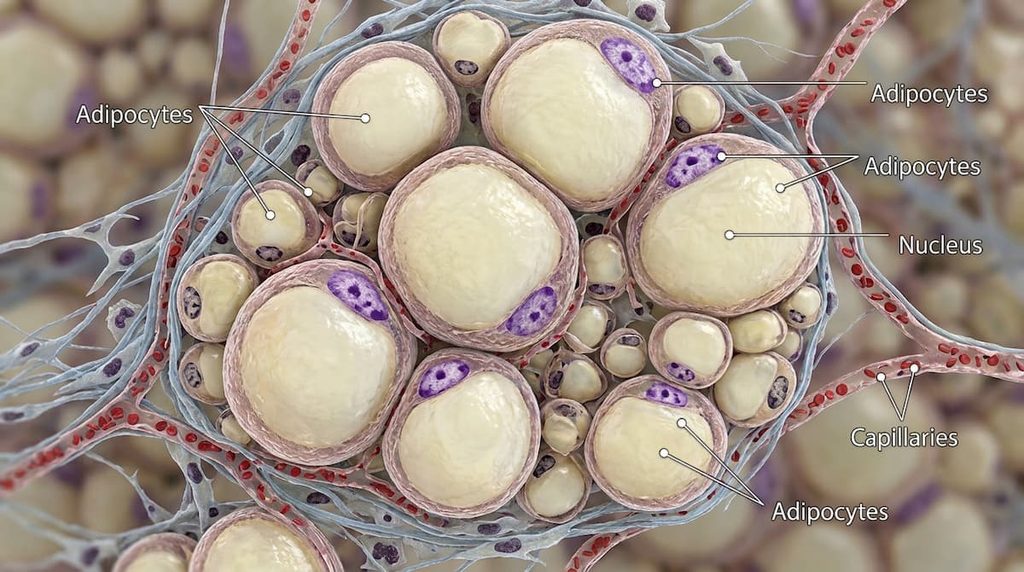
When the body has more energy to store, adipose tissue can expand. Fat cells can become larger, and adipose tissue can undergo changes in its cellular environment.
But different fat depots do not necessarily have identical capacity to expand and store additional lipid.
This is important because adipose tissue is more than a passive bag of calories.
It is a living tissue containing adipocytes, blood vessels, immune cells, connective tissue, and signaling systems. It also releases hormones and other signaling molecules that influence metabolism throughout the body.
A useful way to think about fat storage is as a system with multiple storage sites.
If subcutaneous fat depots can accommodate additional energy effectively, more of that energy may remain stored there.
But when fat distribution becomes metabolically unfavorable, greater visceral and ectopic fat accumulation can occur.
This is one reason researchers have increasingly focused on fat distribution, rather than total fat mass alone.
Norbert Stefan’s review of metabolically unhealthy fat distribution highlighted an important point: cardiometabolic risk can vary substantially among people with similar total fat mass. Greater visceral fat is one important contributor, but impaired expansion of lower-body subcutaneous fat can also be associated with metabolic risk.
So the issue is not that the body has a single storage tank that eventually overflows into the belly.
It is closer to having several storage depots with different biological characteristics and different capacities to handle additional energy.
Why do men and women tend to store fat differently?
Sex is another major part of the pattern.
On average, men tend to have a greater tendency toward central fat accumulation, while premenopausal women tend to store proportionally more fat in subcutaneous depots around the hips and thighs.
These differences are not purely cosmetic.
Human adipose tissue differs between men and women in cellular behavior, tissue environment, and hormonal regulation. Sex steroids can influence adipose tissue metabolism, and genetic studies have found sex-specific effects on several body-fat-distribution loci.
This helps explain why the same amount of weight gain can produce different changes in body shape.
A man and a woman can both gain body fat without necessarily gaining it in the same places.
Even among people of the same sex, however, there is substantial individual variation.
Genes, age, hormone levels, physical activity, diet, and other factors interact. There is no single “male” or “female” fat-storage pattern that applies to everyone.
The important point is that sex-related biology changes the probabilities of where fat is stored.
The pattern can change with age
Fat distribution is not permanently fixed.
As people age, body composition and fat distribution can change even when the total amount of weight gained is modest.
Women provide a particularly clear example because the menopausal transition is associated with changes in the distribution of abdominal fat.
A 2021 study compared women before, during, and after menopause and found differences in abdominal adipose tissue characteristics and visceral fat accumulation. However, the study was relatively small, involving only 33 women.
That makes it useful for understanding possible biological mechanisms, but not strong enough to conclude that menopause alone causes every change in abdominal fat.
Larger longitudinal evidence gives a broader picture.
A six-year analysis from the Women’s Health Initiative followed 10,184 postmenopausal women and tracked changes in abdominal visceral and subcutaneous adipose tissue.
The researchers found important differences in visceral and subcutaneous fat according to age and years since menopause. Women who were more than ten years beyond menopause had less abdominal subcutaneous fat and more visceral fat than women who were less than ten years beyond menopause.
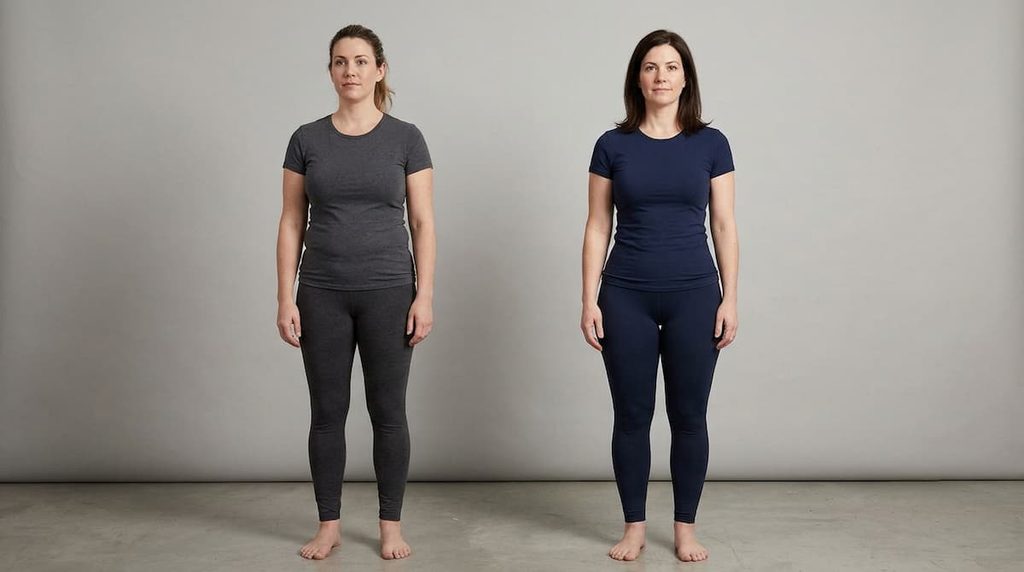
The study also found substantial differences in visceral and subcutaneous fat even among women with similar BMI or waist circumference.
That last finding is particularly revealing.
A waist measurement can tell us something about body size, but it cannot completely reveal what is happening inside the abdomen.
The location and type of stored fat matter too.

So is belly fat simply “bad”?
Not exactly.
This is where the popular idea of “good fat versus bad fat” becomes too simplistic.
Subcutaneous fat is not just a passive layer under the skin. It is metabolically active tissue and an important site for energy storage.
Visceral fat, meanwhile, is more strongly associated with adverse metabolic outcomes.
The difference is therefore not simply that one kind of fat is good and another is bad.
It is that different locations of fat storage are associated with different biological consequences.
This helps explain why two people with the same body weight can have different metabolic risk profiles.
One person may store a greater proportion of excess energy in subcutaneous depots. Another may accumulate relatively more visceral or ectopic fat.
Total body fat matters, but its distribution adds another layer of biological information.
This is also why waist circumference and BMI do not tell exactly the same story.
BMI gives a rough indication of overall body mass relative to height.
Waist circumference provides information related to central adiposity.
Neither measurement, however, directly tells you how much visceral fat is present.
Why does the belly become the place we notice first?
Now the original question becomes easier to answer.
When the body stores more energy as fat, it does not distribute that energy randomly across the body.
Different fat depots have different biological characteristics.
Genetic differences influence the distribution.
Sex-related biology and sex steroids influence the pattern.
Age and hormonal changes can shift the distribution over time.
And the ability of different adipose depots to expand and store energy affects where additional lipid accumulates.
These influences interact.
That is why two people can gain the same amount of weight and still end up with different waistlines.
It also explains why the same person can notice a change in body shape at different stages of life without experiencing a dramatic change in total body weight.
The abdomen is not necessarily a special place where the body decides to dump “extra calories.”
It is one of several major fat-storage regions, and for some people, biological factors make abdominal storage more prominent.
The real question is not “Why fat?” but “Why here?”
A growing belly is easy to interpret as a simple sign of weight gain.
But the biology underneath it is more interesting.
Human fat is divided among multiple depots, and those depots have different genetic influences, cellular properties, hormonal responses, and relationships with metabolic health.
That means body shape is not determined solely by how much energy a person stores.
It is also influenced by where that stored energy goes.
This explains why two people can gain similar amounts of body fat without looking the same, why fat distribution can change with age, and why abdominal fat is not synonymous with visceral fat.
So when someone asks why fat accumulates around the belly, the best answer is not simply, “Because the body stores excess calories there.”
A better answer is:
Because the body has several fat-storage depots, and each person’s biology influences how much additional fat each depot can accommodate and how strongly that depot tends to expand.
The belly is where that distribution pattern often becomes visible.
And that makes the waistline more than a measure of size.
It is a visible clue to the way the body is distributing its stored energy.
Scientific Sources
- Shungin D, Winkler TW, Croteau-Chonka DC, et al. “New genetic loci link adipose and insulin biology to body fat distribution.” Nature. 2015;518(7538):187-196. PMID: 25673412. DOI: 10.1038/nature14132. Read the study on PubMed
- Agrawal S, Wang M, Klarqvist MDR, et al. “Inherited basis of visceral, abdominal subcutaneous and gluteofemoral fat depots.” Nature Communications. 2022;13(1):3771. PMID: 35773277. DOI: 10.1038/s41467-022-30931-2. Read the study on PubMed
- Karastergiou K, Smith SR, Greenberg AS, Fried SK. “Sex differences in human adipose tissues: the biology of pear shape.” Biology of Sex Differences. 2012;3(1):13. PMID: 22651247. DOI: 10.1186/2042-6410-3-13. Read the study on PubMed
- Tchernof A, Després JP. “Pathophysiology of human visceral obesity: an update.” Physiological Reviews. 2013;93(1):359-404. PMID: 23303913. DOI: 10.1152/physrev.00033.2011. Read the study on PubMed
- Stefan N. “Causes, consequences, and treatment of metabolically unhealthy fat distribution.” The Lancet Diabetes & Endocrinology. 2020;8(7):616-627. PMID: 32559477. DOI: 10.1016/S2213-8587(20)30110-8. Read the study on PubMed
- Banack HR, Bea JW, Chen Z, et al. “Longitudinal patterns of abdominal visceral and subcutaneous adipose tissue, total body composition, and anthropometric measures in postmenopausal women: Results from the Women’s Health Initiative.” International Journal of Obesity. 2023;47(4):288-296. PMID: 36739471. DOI: 10.1038/s41366-023-01266-9. Read the study on PubMed
- Abildgaard J, Ploug T, Al-Saoudi E, et al. “Changes in abdominal subcutaneous adipose tissue phenotype following menopause is associated with increased visceral fat mass.” Scientific Reports. 2021;11(1):14750. PMID: 34285301. DOI: 10.1038/s41598-021-94189-2. Read the study on PubMed