[Bit#169] Why Do People Sweat Differently on Their Hands and Feet?
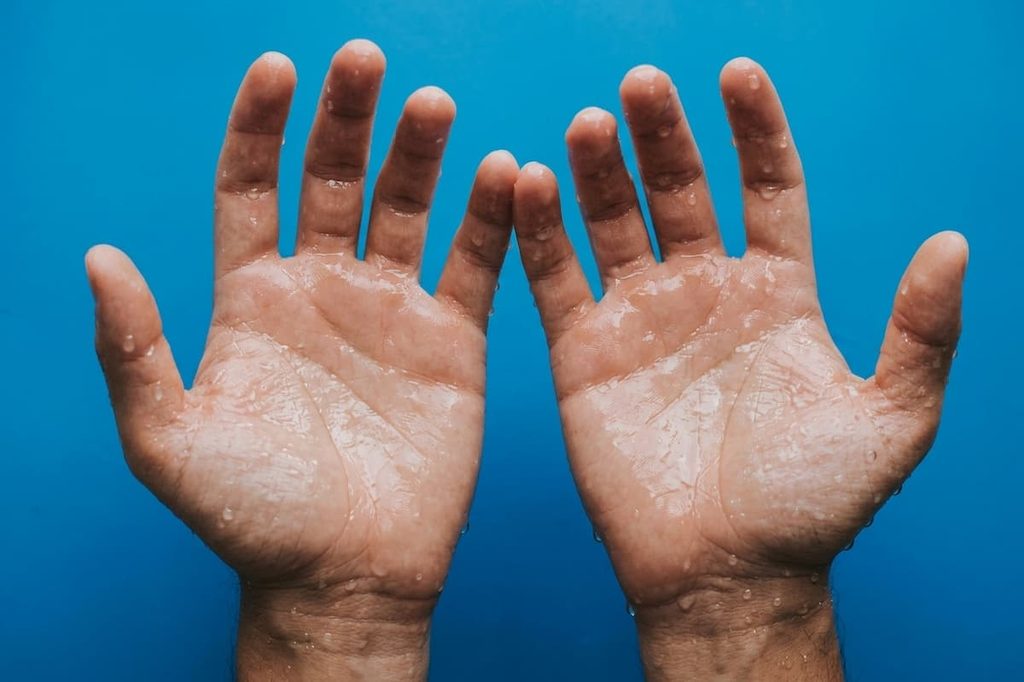
We have all heard the phrase “sweating profusely from tension.” But why do some people shed enough sweat from their palms to make holding a pen difficult, while others remain completely dry all day? Sweat is not merely water drops regulating body temperature. It is a precise signal sent by our autonomic nervous system and genetics. In this article, we examine everything from the identity of palmar and plantar sweating to the scientific causes of localized hyperhidrosis. Let us explore the hidden secrets of our bodies that we experience daily without truly understanding.
1. The Mysterious Interaction Between Eccrine Glands and the Autonomic Nervous System
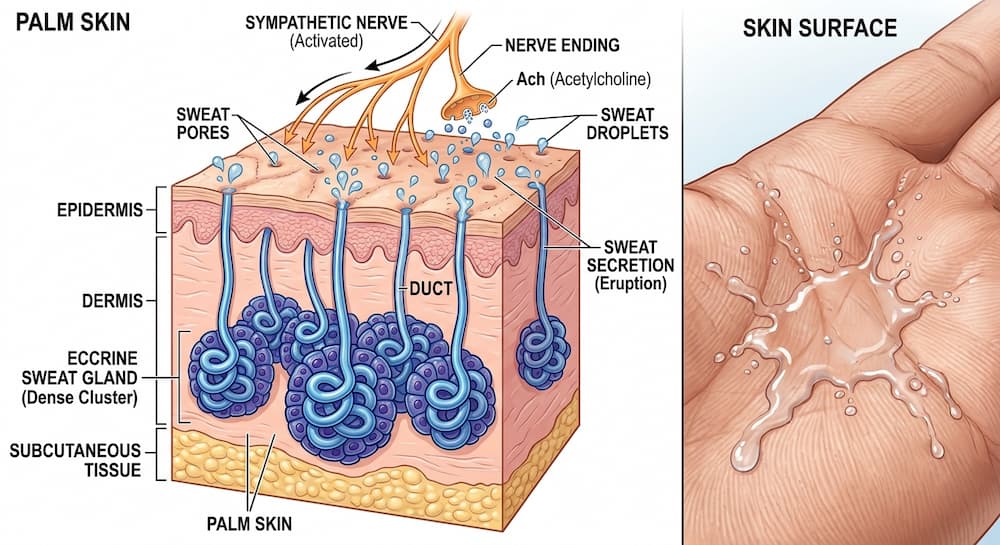
Palms and soles have the highest density of sweat glands in the human body. These areas are densely packed with microscopic tubular organs called eccrine sweat glands. Interestingly, these numerous sweat glands react far more sensitively to mental emotional stimuli than to their original function of temperature regulation.
Sweat produced on hot days and cold sweat forming right before a public presentation start from completely different points. When body temperature rises, the hypothalamus in the brain activates to open sweat glands across the body. Conversely, when emotional stimuli like anxiety or tension rush in, the cerebral cortex instantly fires an emergency signal. This signal directly stimulates the sympathetic nervous system, a key axis of the autonomic nervous system.
When the sympathetic nervous system becomes overly excited, large amounts of a substance called acetylcholine are secreted from nerve endings. The moment this chemical binds to receptors on the surface of eccrine sweat glands, cells surrounding the glands contract rapidly, squeezing internal moisture outward. This is an ancient human survival mechanism designed to increase friction to firmly grip objects or escape flexibly during dangerous moments.
The problem is that even when exposed to identical stress situations, the response magnitude of this signal transmission system varies drastically among individuals. In some people, neurotransmitters are secreted in tiny amounts, keeping their hands dry. In contrast, others have overly sensitive receptors that quickly soak their palms. This subtle difference in nervous system reactivity becomes the decisive factor separating the amount of hand and foot sweat between individuals.
2. Genetic Causes of Palmar Hyperhidrosis and Sympathetic Overactivity
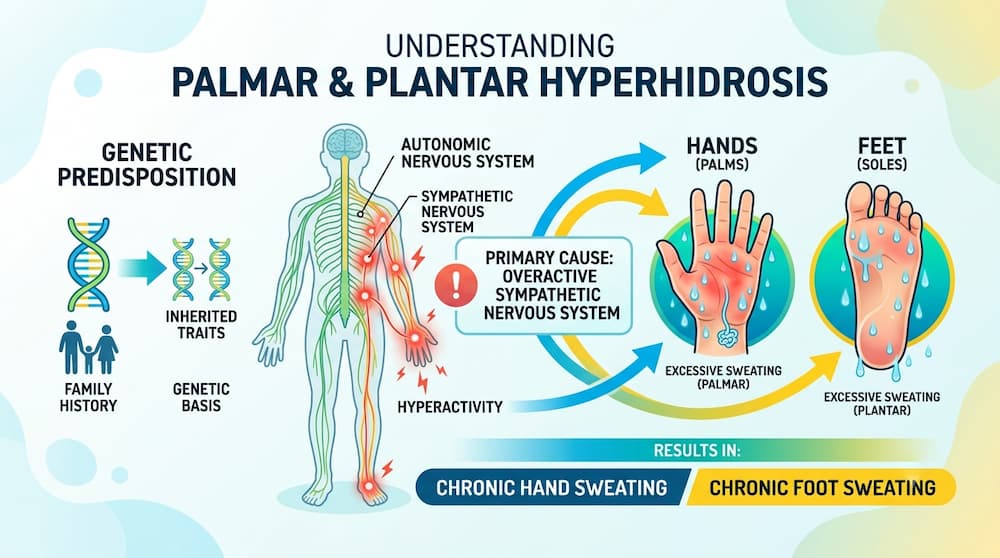
Do people who sweat excessively on their hands and feet simply have more sweat glands? The answer is no. Everyone is born with a similar number of sweat glands. The core difference lies in the sensitivity of the sympathetic nervous system that transmits nerve signals and its overactivation phenomenon where the switch fails to turn off.
Why does the sympathetic nervous system react excessively in specific individuals? The most critical factor here is genetics. In fact, about 30 to 50 percent of patients with localized hyperhidrosis have family members with identical symptoms. Genetic variants act to amplify signals during the nerve transmission process.
Our body’s neural network functions like electrical wiring. While wiring in an average person responds only to certain thresholds of stimulation, wiring in individuals with genetic factors transmits massive currents even under minute stimuli. The sympathetic ganglia located deep in the chest remain in a state of constant excitation. When signals surge excessively, eccrine sweat glands continuously discharge moisture without rest.
Thus, palmar and plantar hyperhidrosis is not a matter of willpower or personality. It is an autonomic nervous system imbalance caused by genetic traits interfering with the signal control switch of the nervous system. Even when unintended, the body misinterprets normal conditions as emergency situations and pours out sweat.
3. Stress and Sweat: Emergency Alarms Sent by the Brain’s Amygdala
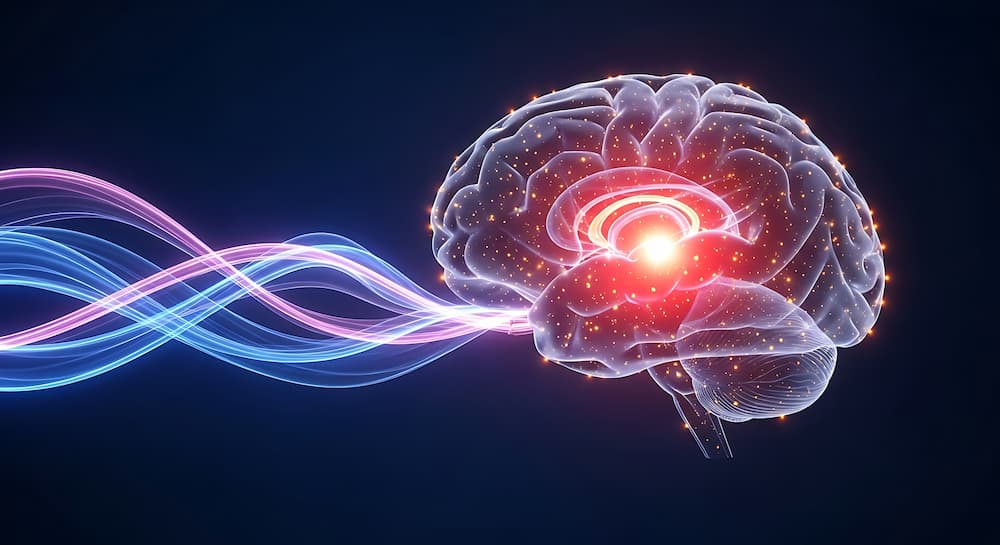
When we feel anxiety or fear, the phenomenon of hands and feet becoming drenched in cold sweat begins in a small organ located deep inside the brain called the amygdala. The amygdala is the brain’s core emergency control tower that detects external threats and processes emotional responses. The moment we stand before a crowd or receive a sharp question from a boss, the amygdala instantly judges it as an immediate survival threat and sends an urgent signal to the hypothalamus. The hypothalamus, receiving this signal, stimulates the adrenal glands to explosively release stress hormones like adrenaline and cortisol into the bloodstream. Why? Because the survival circuit that boosted instantaneous reaction speed when human ancestors encountered predators operates unchanged.
Stress hormones spreading throughout the body via the bloodstream drive the sympathetic nervous system into extreme excitation. Consequently, while heart rate and breathing accelerate, the autonomic nervous system issues a strong contraction command to eccrine sweat glands concentrated on the palms and soles. The sweat generated during this process is the true nature of emotional cold sweat we commonly experience. Unlike general sweat discharged to lower body temperature, cold sweat focused on hands and feet is a biological mechanism to instantaneously secure friction for fleeing or grasping tools. In short, it is an intuitive reaction as the body automatically enters emergency mode during acute crisis situations.
Why does such a striking difference exist in the amount of sweat produced under stress among different people? This occurs because the sensitivity of the amygdala and the reaction speed of neurohormone receptors in the brain are set completely differently for each individual. While one person’s amygdala passes everyday stimuli indifferently, a person with an overly sensitive amygdala misinterprets tiny stimuli as severe crisis situations and over-secretes hormones. If receptors receiving stimuli from the autonomic nervous system are also sensitive, hands and feet quickly get soaked in moisture. Ultimately, differences in hand and foot sweat stem not from individual willpower or mental strength, but from biological sensitivity variations in the brain’s emotional circuits and nervous system.
4. Beyond Constitution: Modern Scientific Approaches to Alleviating Hand and Foot Sweat
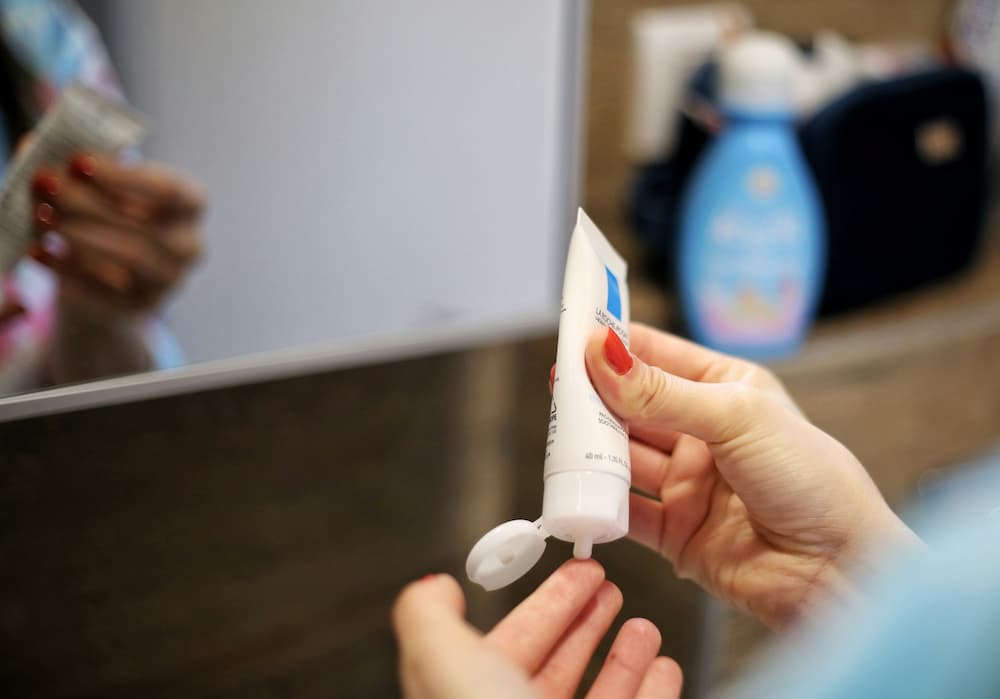
Telling people suffering from sweaty hands and feet that it is just their natural constitution is no longer the right answer. Modern medicine has identified the operational principles of the autonomic nervous system and sweat glands to develop various control methods. Scientific approaches to reducing excessive sweat are broadly divided into topical blockage, neurotransmitter suppression, and signal transmission path interruption.
The most common first approach is topical aluminum chloride formulations. When applied to the skin surface, this ingredient reacts with moisture in sweat pores to form a microscopic gel-like barrier. This barrier physically blocks sweat gland openings to prevent sweat discharge. Sweat glands themselves are not destroyed. As skin cells shed over time, the barrier naturally disappears, which is why simple yet continuous management is necessary.
Another approach involves botulinum toxin injections and iontophoresis. Botulinum toxin directly prevents acetylcholine from being secreted from nerve endings around sweat glands. Without neurotransmitters, sweat glands receive no commands and remain silent. Iontophoresis operates on the principle of passing a microcurrent through water to temporarily pause the transport function of sweat glands. Both methods utilize the scientific principle of severing nerve signal flow midway.
In severe cases, endoscopic thoracic sympathectomy exists as a surgical option. This method cuts off the emergency signal from reaching sweat glands by severing part of the sympathetic nerve running from the chest to hands and feet, essentially cutting the wire. As such, hand and foot sweat is not an area to endure blindly. It is a domain of modern science where signal transmission processes in our body can be accurately understood and controlled.
Conclusion
Through this exploration, we confirmed that hand and foot sweat is not a simple issue of physical constitution, but an interconnected biological signal system involving the brain’s amygdala, autonomic nervous system, and eccrine sweat glands. It is truly paradoxical that sophisticated mechanisms refined by our bodies for survival manifest as daily inconveniences for some.
How many of the physical discomforts we experience are actually excessive protective instincts of the human body designed to guard us? We need to deeply reflect on whether to view uncomfortable signals sent by our bodies as flaws to be suppressed blindly, or to understand them as sophisticated responses for survival.
![[Bit#104] The Secret of Protein Folding: Why Structural Failures Cause Fatal Diseases](https://hiddenbitknowledge.com/wp-content/uploads/2026/07/main.protein-folding-768x429.jpg)
![[Bit#18] From a Badge of Survival to the Root of Disease: The Cruel Paradox of Obesity](https://hiddenbitknowledge.com/wp-content/uploads/2026/05/48843f2b382a-768x512.jpg)
![Why Does Flexibility Decrease With Age? [Bit#179]](https://hiddenbitknowledge.com/wp-content/uploads/2026/10/main-image-3-768x428.jpg)
![Why Do We Get Hiccups? The Science Behind That Sudden “Hic” [Bit#176]](https://hiddenbitknowledge.com/wp-content/uploads/2026/10/main.hiccups-768x419.jpg)
![[Bit#74] The Warning from Siberia: Ancient Viruses Awakening from the Permafrost](https://hiddenbitknowledge.com/wp-content/uploads/2026/06/main.virus-and-ice-768x432.jpg)
![[Bit#1] The Science of Coffee Naps: Why Caffeine and Sleep are the Ultimate Power Couple](https://hiddenbitknowledge.com/wp-content/uploads/2026/04/20260414_coffee_main-768x512.jpg)